Home improvement often begins with paint, flooring, or new cabinets, but lighting determines how all of those choices look after sunset. A carefully planned home improvement lighting scheme can make a small room feel deeper, a kitchen feel cleaner, and a bedroom feel calmer without changing the architecture. The key is to stop treating each fixture as an isolated purchase. Think instead about what the room needs you to see, do, and feel.
I approach residential lighting by starting with the visual problem. Is the countertop shadowy? Does the living room feel flat? Is the hallway bright enough for safe movement but still comfortable at night? Once you answer that question, the fixture becomes a tool rather than the entire design.
Start with the three layers of light
A successful home improvement plan usually combines ambient, task, and accent lighting. Ambient light provides general visibility. This might come from recessed downlights, a flush mount, a large pendant, or indirect light bouncing from a wall or ceiling. It should let you move through the room without creating severe glare.
Task light is aimed at a specific activity. Under-cabinet lighting helps you read a cutting board, a swing-arm lamp supports reading, and vanity sconces illuminate a face more evenly than a ceiling fixture. Accent light adds visual focus. It can highlight artwork, a textured wall, open shelving, or the architecture around a fireplace.
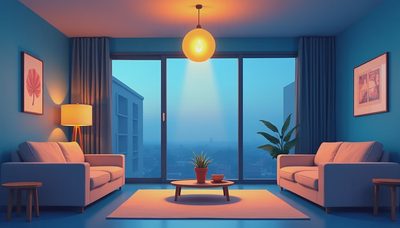
The layers should overlap, but they should not all be equally bright. In a living room, ambient light might be modest, task lamps can support reading, and accent light can create the warm points your eye notices first. This balance is one of the most useful home improvement ideas because it improves atmosphere without requiring an expensive chandelier.
A practical test is to turn on each layer separately after dark. If the room only looks acceptable when every switch is on, the design probably relies on brightness instead of composition.

Plan fixture placement before closing the walls
Many lighting problems are really planning problems. A recessed light placed directly over a person's head can cast shadows across their face. In a kitchen, downlights installed behind the cook can put the work surface in darkness. A pendant centered on the room instead of the dining table may look symmetrical on a floor plan but feel wrong in daily use.
Before a home improvement project reaches the electrical stage, mark furniture, cabinet runs, mirrors, artwork, and major walkways on the plan. Then locate the light in relation to those elements. Over a kitchen counter, the useful light should reach the front half of the work surface without being blocked by the person standing there. At a bathroom mirror, light from both sides or from a broad fixture above can reduce the strong shadows produced by one overhead source.
Spacing matters, but uniform spacing is not the goal. A row of identical recessed lights may be easy for an installer, yet it can produce a commercial-looking ceiling. Concentrate light where the room needs it and use fewer fixtures where it does not. The result is often more comfortable and can reduce both installation cost and energy use.
Choose color temperature and CRI deliberately
Color temperature describes whether a lamp appears warm or cool. It is measured in Kelvin, although you do not need to memorize the scale. Around 2700K produces a warm, familiar glow that suits bedrooms, living rooms, and many dining areas. Around 3000K remains warm but looks a little cleaner, which often works well in kitchens, bathrooms, and transitional interiors. Higher temperatures can appear crisp or blue and are easy to overuse in a home.
Color rendering index, or CRI, describes how naturally a source reveals colors compared with a reference source. A high-CRI lamp is especially valuable near a bathroom mirror, clothing closet, kitchen island, or artwork. Tomatoes, wood tones, skin, and paint samples can look noticeably dull under a poor source even when the fixture itself is attractive.
For most residential home improvement work, I prefer warm-to-neutral LEDs with CRI 90 or higher in spaces where color matters. Do not select color temperature from a tiny online image. Test a sample in the actual room, next to the flooring, cabinets, and wall color. A 3000K lamp can look very different against cool gray paint than against cream walls.
Use dimmers as part of the design
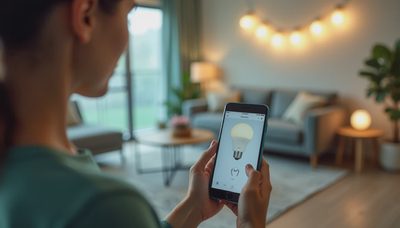
A dimmer is not just a luxury feature. It lets one lighting system support different moments: bright enough for cleaning, moderate for dinner, and low enough for a movie. Dimming also helps new fixtures coexist with existing lamps when their output levels differ.
Confirm that the LED lamp and dimmer are compatible. Some combinations flicker, buzz, or fail to dim smoothly. For a major home improvement installation, specify compatible dimmable lamps and controls before the electrician begins. If a room has several layers, place them on separate controls rather than connecting every source to one switch.
A kitchen might use one switch for ceiling ambient light, another for under-cabinet task light, and a third for a decorative pendant. In a bedroom, bedside sconces should be controllable from the bed, while general lighting can remain at the entry. Small control decisions often make a room feel more expensive because they match how people actually use it.

Room-by-room priorities that prevent common mistakes
In the kitchen, begin with shadow-free work light. Continuous under-cabinet LED strips usually perform better than isolated puck lights because they create fewer bright spots. Add decorative pendants only after the counters and sink are properly illuminated.
In the living room, avoid putting every light in the ceiling. A floor lamp, table lamp, wall light, and discreet accent source can create a more relaxed composition. Aim accent light at a wall or object rather than directly at seating, where glare becomes distracting.
In the bathroom, place light at the mirror rather than relying on one recessed fixture. Wet locations also require fixtures and installation methods rated for the conditions involved. In a bedroom, keep sources soft and controllable. Low-glare fixtures and warm lamps support winding down better than bright, cool ceiling light.
For hallways and stairs, prioritize consistent visibility and clear switching at both ends where appropriate. Motion sensors can be useful in utility areas, but their timing and sensitivity should suit the space. Safety is an important part of home improvement, not an afterthought.
A realistic budget and specification checklist
Lighting budgets vary widely, but a simple room refresh might involve $100 to $300 for lamps, dimmers, and LED replacements. Adding several recessed fixtures, new wiring, or custom decorative fixtures can push a project into the $1,000 to $5,000 range depending on access, ceiling construction, and labor. Decorative fixtures from brands such as Schoolhouse, Visual Comfort, Tech Lighting, and Mitzi span very different price levels, so decide which pieces deserve attention before shopping.
When comparing products, record the fixture type, lumens, color temperature, CRI, beam spread, dimming compatibility, wet or damp rating, and replacement method. Lumens describe light output more usefully than wattage; watts describe energy consumption. A fixture with a narrow beam may look bright on one object but leave the surrounding room dark.
For a home improvement project, photograph the room at night and mark areas that feel harsh, dim, or visually unimportant. Set a budget, choose the lighting layers, verify electrical locations, and test lamp color before buying multiples. If you are moving wiring or adding circuits, use a licensed electrician and follow local requirements.
Good lighting is not about filling every ceiling with fixtures. It is about giving each activity the right visibility, giving materials the right color, and giving your eyes somewhere pleasant to rest. That framework makes home improvement decisions clearer, and it produces rooms that continue to feel right long after the renovation photos are finished.