
A lot of rooms look finished in daylight and fall apart at night. That is usually the moment I get called in. Bedroom lamps are one of the simplest fixes because they put light where people actually use it: beside the bed, at eye level, and close enough for reading without flooding the whole room. When a bedroom only has a ceiling fixture, the room often feels flat, harsh, or strangely dim in the wrong places. The goal is not more light everywhere. The goal is calmer light in the right spots, with enough control that a room can shift from alert to relaxed in a few seconds.
Bedroom lamps and the layering principle
Most homeowners think of a lamp as a decorative object first, but the room works better when the lamp earns its place. Bedroom lamps are part of the layering principle, which means they should support the overhead light instead of competing with it. In practical terms, that usually means one softer source for general mood, one focused source for reading, and a way to dim both. A bedside lamp should make the bed feel like a place to land, not a spotlight stage. If the lamp throws light straight into your eyes, the shade is too short, the bulb is too exposed, or the lamp is simply too tall for the furniture around it. I prefer to see the light source disappear just above seated eye level. That keeps the room comfortable and prevents the tired, washed-out look that happens when the bulb is doing too much of the talking.
How to size the lamp to the nightstand
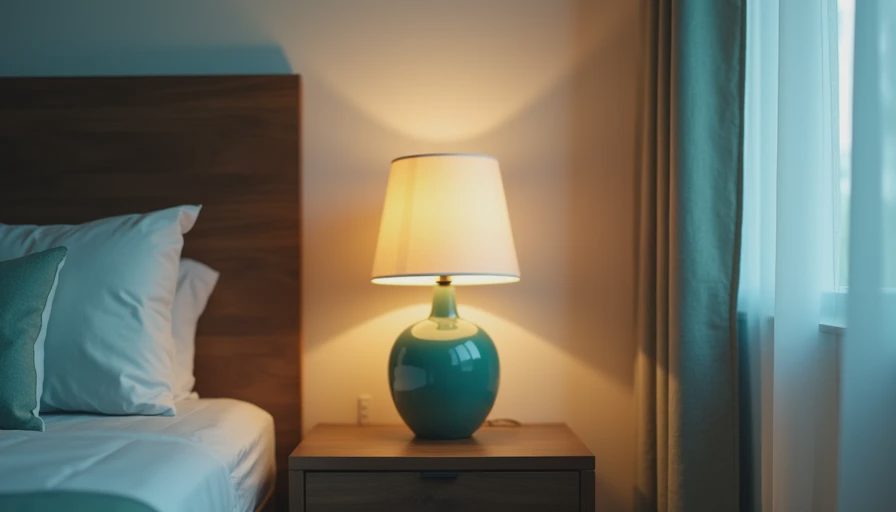
Bedroom lamps work best when they are treated as task lights first and decor second. Start by looking at the nightstand and the mattress together. If the lamp base swallows most of the tabletop, the room feels crowded before you even turn it on. A good rule is to leave enough open surface for a book, a phone, and a glass of water. Height matters just as much. For many beds, the bottom of the shade should sit near seated eye level, often somewhere around 24 to 30 inches above the nightstand, depending on mattress height and headboard scale. That keeps glare down and puts the beam where your hands and pages are. If the lamp is too short, the shade can block the light and make reading harder. If it is too tall, the bulb ends up in your peripheral vision and the glow feels hard instead of restful.
There is also a scale problem that shows up in photos but is even more obvious in person. A tiny lamp on a big upholstered headboard looks accidental, while an oversized lamp can make a modest room feel heavy. I like to think in proportions: the lamp should echo the bed, not fight it. On a tall, substantial nightstand, a slightly taller lamp often looks more settled. On a narrow table, a slimmer base and a cleaner shade usually do better. The finish matters less than the silhouette at night.

Choose the bulb before you choose the finish
The prettiest lamp in the store can still feel wrong if the bulb is mismatched. For most bedrooms, I start with warm-white LED bulbs in the 2700K to 3000K range. Lower color temperatures feel softer and more sleep-friendly; the higher end of that range can help a room with very white walls feel a little clearer. I usually like 450 to 800 lumens per lamp depending on shade material and room size, then I dim from there. If the room is small, two 450-lumen lamps may be enough. If the room doubles as a dressing area, a brighter bulb can save the day. What matters most is control. A dimmable LED paired with a simple plug-in dimmer or a smart dimmer from a brand like Lutron gives you far more flexibility than a fixed-output bulb ever will.
Shade material changes the whole experience. A fabric shade softens contrast and hides the bulb better, which is ideal for winding down. A more opaque shade shapes the beam and helps with reading, but it needs the bulb placed carefully so the light does not trap itself inside the shade. If you like a glass base or an open silhouette, use a frosted bulb so the source does not glare across the room. I also look for a color rendering index around 90 or above when possible, because skin tones, bedding, and wood finishes simply look more natural under better light.
Bedroom lamps for reading without glare
If one person reads while the other is trying to sleep, the lamp setup needs to be more disciplined. Bedroom lamps should light the page, not the pillow across the bed. That usually means the light should come from the reading side and stay low enough to avoid shining across the room. A lamp with a slightly narrower shade opening, or one with an adjustable arm, can be a better choice than a beautiful but scattershot design. In rooms where the bed is centered but the nightstands are not identical, I sometimes make the reading side a touch brighter and leave the other side softer. That creates balance without making both sides identical.
You do not need a complicated system to get this right. A single lamp can work if the bulb is dimmable and the shade is sized properly. Two coordinated lamps often work even better because they create symmetry and make the bed feel grounded. If the ceiling light is especially harsh, use it only when you need to clean or dress, then let the lamps take over for the rest of the evening. That simple shift changes the room more than most people expect.
A practical buying plan for most rooms
When I walk a homeowner through a bedroom refresh, I keep the sequence simple. First, measure the nightstand height and the top of the mattress. Second, decide whether the room needs softer evening light, stronger reading light, or both. Third, pick the bulb before you fall in love with the base. That order prevents a lot of expensive mistakes. A lamp that looks amazing online can still fail if it is too short for the bed, too bright for the shade, or too cool in color for a room meant to feel quiet at night. If you are stuck between two options, I usually choose the one with better dimming control and a more forgiving shade.
Bedroom lamps should make the room easier to live in after sunset. They are not just a styling layer; they are the part of the lighting plan that makes the bedroom feel human again. If your current setup leaves the room flat, bright in the wrong places, or awkward to read in, start with height, bulb color, and dimming. In most homes, that is enough to turn a decent room into one that finally feels finished.