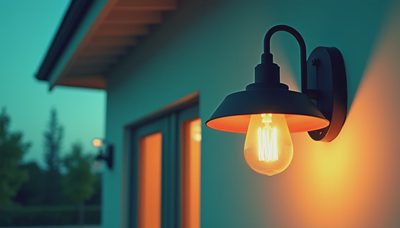
Standing in the lighting aisle with a dead bulb in one hand and your phone in the other is a familiar feeling. You know what the fixture looks like, but the sheer number of boxes makes it hard to know which one will work. This light bulb guide size covers the three things that actually determine whether a bulb will fit and perform: the base, the shape, and the light output. Once you understand those, you can walk into any hardware store or online search and pick the right bulb in under a minute. I've walked hundreds of homeowners through this same process during renovations, and the rules are consistent across every brand.
Start With the Base: The Number That Actually Matters
The base is the screw part that goes into the socket, and it is the first thing to check. In the US, the most common household base is E26, which stands for Edison screw with a 26-millimeter diameter. Standard A19 bulbs use E26 bases, and most table lamps, floor lamps, ceiling fixtures, and vanity lights accept them. If you have a chandelier, a ceiling fan light kit, or a small decorative sconce, you likely need E12, the candelabra base. Those are the two you will run into most often, but there are others. GU10 and GU24 bases are common in track lighting and certain recessed fixtures, and they twist or pin into place rather than screw. The base size is non-negotiable: a bulb with the wrong base will not fit safely, so always check the socket before you buy anything.

Shape and Designation: Why A19 and BR30 Look Different
Once the base is right, the shape controls whether the bulb physically fits inside the fixture. The letter-and-number codes printed on the box, like A19 or BR30, tell you the shape and diameter. A means standard household shape, and the number is the diameter in eighths of an inch, so A19 is 19 eighths, or about 2.4 inches wide. BR stands for bulged reflector, commonly used in recessed cans and track heads. BR30 is 30 eighths, about 3.75 inches across. If your recessed fixture has a trim ring that's 6 inches wide, a BR30 fits well; an A19 might look odd and not distribute light the way the reflector is designed to. The shape also affects beam spread. Reflector bulbs throw light in a directed cone, while A-shaped bulbs scatter it everywhere. For a pendant over a dining table, an A19 gives a soft ambient glow. For a kitchen island, a BR30 with a tight beam can spotlight the counter while leaving your eyes in shadow. Match the shape to the fixture, not just to what looks good on the shelf.
Light Output: Lumens, Not Watts
If you grew up choosing bulbs by wattage, you're not alone, but wattage is a measure of energy use, not brightness. Since LEDs use far fewer watts for the same light, lumens are the number to watch. A standard 60-watt incandescent bulb puts out about 800 lumens. A 100-watt bulb is roughly 1,600 lumens. For a bedside lamp, you might want 450 to 800 lumens. For a garage or workbench, 1,600 or more is better. LED packages now print “800 lumens” on the front, usually with a brightness comparison like “replaces a 60-watt bulb.” Use that equivalent number as a starting point. This is where most people overshoot: they buy a 1,600-lumen bulb for a small sconce and wonder why the room feels like an operating room. The fix is simple. Choose lumens based on the task and the room size. A reading corner needs directed task light, while a hallway needs only enough to navigate safely.

Color Temperature and CRI: The Feel of the Light
Color temperature, measured in Kelvin, determines whether light looks warm or cool. Lower numbers around 2700K give that cozy amber glow of old incandescent bulbs. Higher numbers, around 5000K, mimic daylight and can feel sterile in a living room. Most homes feel best with 2700K to 3000K in bedrooms and living areas, and 3500K to 4000K in kitchens, bathrooms, and laundry rooms. CRI, or color rendering index, measures how accurately colors appear under the light. A CRI of 90 or above makes food, artwork, and skin tones look natural. Many budget LED bulbs land around 80 CRI, which is fine for closets but can make a kitchen look washed out. If you care about how a room looks, pay the extra dollar for a bulb with a high CRI and a color temperature that suits the space.
A Simple Light Bulb Guide Size Checklist for Your Whole Home
Use this light bulb guide size checklist when you're replacing bulbs room by room. Start in the living room and write down the base and shape for each fixture. Then note the lumens, color temperature, and CRI you want from the lists above. For a chandelier, choose E12 candelabra bulbs with a warm 2700K temperature. For recessed cans in a kitchen, choose BR30 with 3000K and a CRI above 90. For a floor lamp next to a reading chair, pick an A19 with 800 lumens and a dimmable driver if you plan to use a dimmer switch. For outdoor fixtures, look for bulbs labeled damp-rated or wet-rated, and choose something around 2700K to keep the porch feeling welcoming. Write these details down and keep the list in your phone. The next time you need a bulb, you won't have to check the socket again.