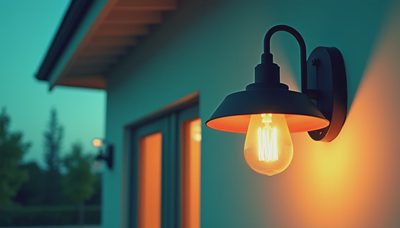
You have a tiny bedroom, a narrow hallway, or a powder room that feels like a cave. You don't need more light; you need the right light. If you have been hunting for light shades small enough for a hallway sconce, you already know the problem: most fixtures are sized for great rooms, not for the spaces you actually live in. This guide explains how to choose compact shades, where to put them, and why the smallest fixture in a room often does the heaviest lifting.
Why Scale Matters More Than Wattage
The most common mistake I see in Houston renovations is picking a fixture based on total lumens instead of visual weight. A six-foot-wide chandelier in a breakfast nook does not make the room feel brighter; it makes it feel smaller. Light shades small in scale change that. A compact shade focuses the beam, reduces glare, and leaves the ceiling open. When the eye can see the full surface of the wall and floor, the room registers as larger.
Think about a bedroom with a single ceiling fixture. The moment you add a small wall sconce at reading height, the light spreads horizontally rather than dropping from above. That small shade becomes the anchor. The same principle works in a hallway. One small fixture at eye level can replace a harsh overhead downlight, and the walls feel taller. In commercial projects, we talk about the brightness of the source versus the brightness of the room. Bare bulbs are often far brighter than the surfaces they light. A small shade wraps the source, bringing that brightness down to something the eye can tolerate. A comfortable room is rarely a bright room.

The Layering Principle for Compact Rooms
Good lighting is never a single fixture. It is layers: ambient light for the whole room, task light for specific jobs, and accent light for texture. In small spaces, layers matter even more, because a single bright ceiling light flattens the room. Look for light shades small enough to sit in multiple layers without shouting. A 6-inch drum shade on a swing-arm sconce handles task lighting. A small ceramic pendant over a bedside table creates accent light. The ambient layer can come from a shaded lamp bouncing light off the ceiling.
When you layer properly, each fixture has a job. The room changes character through the day. In the morning, task light at the coffee station. In the evening, low accent light at the edges. A single large fixture cannot do any of that well. Small shades let you build a room in layers without making each layer feel like a separate item.
How to Size a Shade for a Small Room
Size is not a style guess. Use the ceiling height and the furniture around the fixture. In a standard 8-foot room, a pendant should hang so the bottom edge lands no lower than 6 feet 6 inches from the floor. For a shade over a bathroom vanity, keep the diameter under one-quarter of the mirror width. For a bedside table next to a low platform bed, look for light shades small enough to keep the center of the shade at eye level when you are lying down. These numbers are starting points, but they keep a shade from becoming the loudest object in the room.
Also think about the path you walk. A short hallway with a door at the end can take a 7-inch wall sconce. A larger shade would block the sightline. In a compact bathroom, a 6-inch glass shade over the mirror gives clean task light without crowding the sink. You are not just buying a lamp; you are shaping the path through the room.

Materials and Finishes That Make a Shade Work
Light shades small enough for any corner of your home are easy to find if you focus on materials. Translucent acrylic or frosted glass lets light pass through, so even a tiny shade feels luminous. Opaque metal shades are better for task light because they send light downward and keep the ceiling quiet. For a small space, white or cream shades bounce the most light. A dark shade absorbs light, which works in a media room but not in a hallway you need to navigate at night.
Before you buy, check the diffuser. Some small shades have a coated interior that softens the beam; others are bare. In a cramped room, you want a gentle cutoff at the shade's edge, not a hard line on the wall. The holder finish matters too. A brushed brass or satin nickel lamp holder disappears into the background, while a colored cord can add a playful accent without adding visual bulk.
Where Small Shades Work Best (and Where to Skip Them)
Some spots are made for compact fixtures. Add a small shade to a hallway nook, a laundry room ceiling, a powder room sconce, or a stairwell landing. These are transition spaces where a large fixture feels oppressive. Keep the shade within arm's reach so you can change the bulb easily. Skip small shades for the center of a living room where you need broad ambient spread. A tiny pendant in the middle of a 14-by-16-foot room makes the ceiling feel flat and scattered. Use a slightly larger shade there, and save the small ones for the edges.
A Quick Mental Checklist Before You Buy
You do not need a lighting plan drawn by an engineer to buy a compact shade, but answer four questions first. What is this light supposed to do? For task light, choose an opaque shade with a clean downward beam. For accent light, choose a translucent shade with a warm glow. How much visual space can it take? Measure the clearance in front of the shade and above it. A 6-inch shade can still feel oversized on a 4-inch sconce backplate. What color surrounds it? Light shades work best on light walls; dark walls need brighter fixtures or larger openings. Can you reach the bulb? Many compact shades use standard E12 or E26 bases, so adjust brightness later without changing the fixture.
The best compact room is the one where visitors cannot name the fixtures. They just feel the comfort. When you choose light shades small enough to disappear into their purpose, every space in your house gets a little bigger.