When homeowners ask about a BR30 vs PAR38 bulb, they are usually trying to solve a lighting problem, not win a vocabulary quiz. One lamp looks too wide in a recessed can, a kitchen counter has dark patches, or a living room feels strangely flat after the renovation. The shape printed on the package affects how light leaves the fixture, where it lands, and how comfortable the room feels.
The short answer is that BR30 bulbs are usually the better general-purpose choice for residential recessed cans, while PAR38 bulbs deliver a narrower, more concentrated beam. That difference matters more than the wattage printed on the box. Before buying, compare the lamp’s diameter, beam spread, brightness, color temperature, and the job you want the light to perform.
What BR30 and PAR38 actually mean
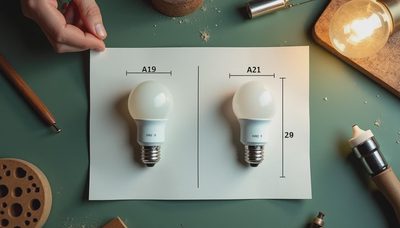
The letters describe the bulb’s reflector shape. BR means bulged reflector. A BR30 has a rounded reflector that spreads light fairly broadly and softly. The number 30 refers to the bulb diameter in eighths of an inch, making a BR30 about 3.75 inches wide.
PAR means parabolic aluminized reflector. A PAR38 has a more precise, often faceted reflector designed to control and project light. The 38 indicates a diameter of about 4.75 inches. That extra inch is important: a PAR38 is not simply a brighter BR30. It is a larger lamp with a different optical pattern.
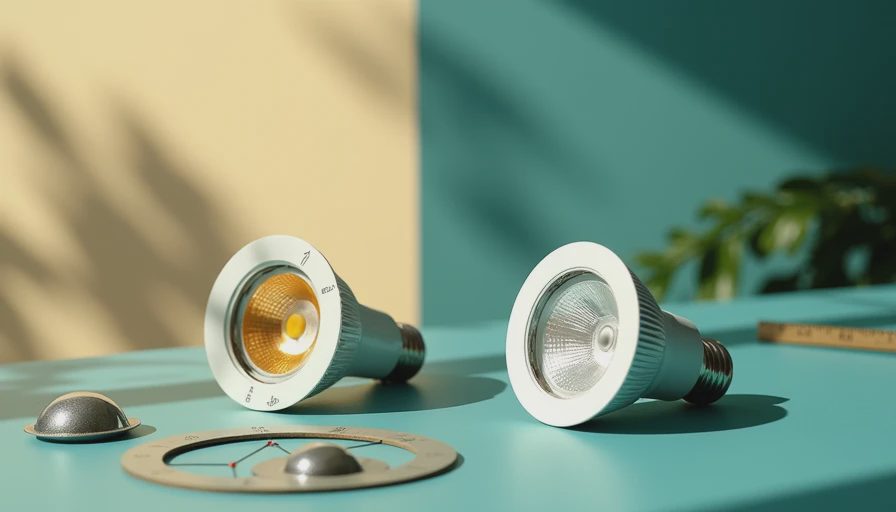
In a BR30 vs PAR38 bulb comparison, think of the BR30 as a wide paintbrush and the PAR38 as a tighter spotlight. BR30 light overlaps easily across a ceiling. PAR38 light can emphasize a painting, kitchen island, fireplace, or exterior wall, but it can also create obvious bright and dim areas when aimed carelessly.
Beam angle and brightness: the practical difference
Beam angle describes the spread of light leaving the lamp. Many LED BR30 bulbs have beam angles around 90 to 110 degrees, although the exact specification varies by model. Common PAR38 LEDs often fall closer to 25 to 40 degrees. A narrow beam does not automatically mean more lumens, but it concentrates those lumens into a smaller area, making the target appear brighter.
Imagine a ten-foot kitchen island with three six-inch recessed fixtures. BR30 lamps can provide broad overlapping pools that make the countertop feel continuous. PAR38 lamps might create three intense ovals, with noticeable gaps between them. In that setting, the BR30 usually produces the calmer result.
Now picture a twelve-foot wall with artwork or textured stone. A PAR38 aimed at the surface can create stronger visual emphasis and shadow modeling. A BR30 may spread beyond the feature and dilute the effect. The right lamp depends on whether you want to fill a plane or direct attention.
Lumens still matter. A typical household LED BR30 may produce roughly 650 to 1,100 lumens, while a PAR38 may produce 1,000 to 1,500 lumens. Those are broad buying ranges, not universal rules. Read the package, because a high-output BR30 can outperform a low-output PAR38.
Which bulb fits a recessed can?
Physical fit is where many purchases go wrong. A standard five- or six-inch recessed housing often accepts a BR30 comfortably, especially when the trim is designed around that lamp profile. Some larger housings accept PAR38 bulbs, but the lamp may sit close to the trim or extend farther below the ceiling. That can change the appearance of the fixture and increase glare.
A BR30 vs PAR38 bulb decision should begin with the housing label, not the online product photo. Look for the maximum lamp diameter and the approved bulb type. If the fixture uses a six-inch retrofit LED module, neither bulb may be appropriate because the module replaces the lamp and trim as one assembly.
Check clearance around the socket as well. PAR38 lamps are wider and heavier, and their deeper reflector can interfere with baffles, gimbals, or decorative trims. If you are replacing several lamps, test one first with the lights off and the trim installed. A five-minute fit check can prevent an expensive return and a ceiling full of mismatched glare.
Choosing color temperature and CRI
Shape controls distribution, but color quality controls atmosphere. For most living rooms, bedrooms, and dining spaces, 2700K or 3000K LED bulbs create a warm, residential appearance. A 3500K or 4000K lamp can feel cleaner in a garage, utility room, or contemporary workspace, but it may look stark beside warm wood and cream-colored paint.
CRI, or color rendering index, describes how naturally a light reveals colors compared with a reference source. Look for an LED with CRI 90 or higher in kitchens, bathrooms, art areas, and rooms with rich finishes. High CRI helps vegetables look fresh, skin tones look natural, and cabinet colors remain believable.
In a BR30 vs PAR38 bulb comparison, do not choose by shape alone. A poorly made PAR38 with harsh 5000K light can make a beautiful room feel commercial. A well-made 3000K BR30 with high CRI may feel substantially more refined, even if both lamps list similar lumen output.
Room-by-room recommendations
For general kitchen lighting, BR30 is usually the starting point. Its broad distribution supports food preparation, cleanup, and movement without forcing every beam onto one small area. Use dimmable LEDs if the kitchen also serves as a gathering space, and keep the color temperature consistent with under-cabinet lighting.
For a living room, BR30 bulbs work well for ambient light in recessed cans. If the room contains artwork, a bookcase, or a textured fireplace, add a few adjustable fixtures with PAR38 lamps rather than converting every ceiling light. This creates layers: general illumination first, then focused accent light.
For a high ceiling, PAR38 can be useful because its concentrated beam holds intensity over a longer distance. It is also a sensible option for an outdoor-rated floodlight or a track head aimed at a distant wall. Confirm that the fixture is rated for the lamp and that the LED bulb is approved for damp locations when necessary.
Bathrooms need careful glare control. A BR30 in a deep baffle can provide comfortable overhead light, but it should not replace vertical lighting at the mirror. Face-level sconces reveal the face more evenly than a ceiling lamp directly above the head.
A simple buying process
Start by measuring the existing lamp or reading the fixture label. Confirm the diameter, base type, dimmer compatibility, and whether the fixture is rated for enclosed use. Then decide whether the room needs broad ambient light or a concentrated accent. Choose lumens based on the task, not the old incandescent wattage comparison alone.
Next, select color temperature and CRI. Buy one sample bulb before ordering a full case, especially when mixing lamps from different brands such as Philips, Feit Electric, GE, or Cree Lighting. Place the sample in the actual fixture, dim it, and view it from the seating position. A lamp that looks acceptable in a store can reveal glare or an unpleasant tint once installed overhead.
Finally, check the beam pattern at night. Look for dark gaps, bright hotspots, and reflections on glossy counters or television screens. If the room feels uneven, changing from PAR38 to BR30 may solve the problem more effectively than simply adding lumens.
The best BR30 vs PAR38 bulb choice is therefore about the visual task. Use BR30 for broad, comfortable coverage and PAR38 for controlled emphasis or longer throws. Once you match the reflector to the room, the lighting begins to support the architecture instead of competing with it.