If you have ever stood in a hardware store comparing boxes that all look nearly identical, you are not alone. Asking what does A19 mean on a light bulb is really a question about shape and fit, not a mysterious rating. The code tells you the bulb’s general form and diameter, while other markings explain brightness, color, energy use, and compatibility with your fixture.
The simple meaning of A19
The letter A describes the bulb’s shape. “A” means an arbitrary or standard household bulb with a rounded, pear-like profile. It is the familiar shape used in table lamps, floor lamps, open pendants, ceiling fixtures, and many bathroom fixtures.
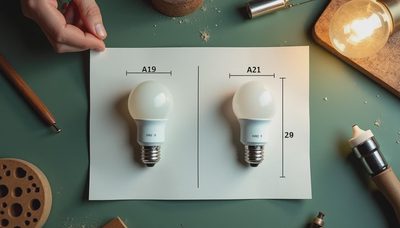
The number 19 refers to the bulb’s diameter in eighths of an inch. Divide 19 by 8 and you get 2.375 inches, so an A19 bulb is approximately 2 3/8 inches wide at its largest point. Manufacturers use the same naming convention for related sizes, such as A15 and A21. An A15 is narrower, while an A21 is wider and often produces a larger visual presence.
This answers what does A19 mean on a light bulb, but it does not tell you everything about the lamp. A19 identifies the envelope shape and size. It does not specify whether the bulb is LED, incandescent, dimmable, warm white, daylight, or suitable for a damp location.

A19 versus A15 and A21 bulbs
Choosing among these sizes is partly a visual decision and partly a clearance decision. An A15 bulb measures about 1 7/8 inches across and works well in smaller lamps, narrow sconces, and compact appliances. An A21 is about 2 5/8 inches across, making it useful when you want more output or a fuller-looking bulb in a large shade.
An A19 sits between those two options and is the most common general-purpose size. Before buying, measure the fixture’s socket-to-shade distance and the opening at the bottom of the shade. A bulb can fit the socket but still touch the shade, sit too close to a metal housing, or look visually crowded.
For example, an A19 LED usually looks balanced in a standard living room table lamp. In a small bedside lamp, an A15 may prevent the shade from appearing oversized. In a large glass pendant over a kitchen island, an A21 can fill the fixture more convincingly, especially when the bulb is meant to be seen.
The base is a separate measurement
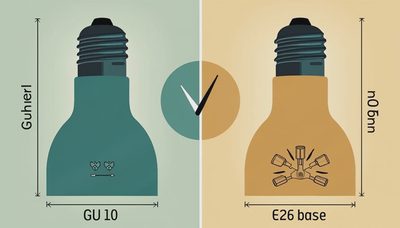
One of the most important details is that A19 does not describe the screw base. In the United States, most household A19 bulbs use an E26 medium base. The “E” refers to Edison screw threads, and 26 indicates a base diameter of 26 millimeters.
That means a package can say A19 and E26 together: A19 describes the glass or plastic bulb shape, while E26 describes the part that screws into the socket. These specifications solve different problems. A bulb can have the correct A19 shape but the wrong base for a specialty fixture.
You may also see E27 bulbs, which have a similar medium screw base used widely outside the United States. Do not force a bulb into a socket simply because the bulb shape looks right. Check the fixture label, socket type, and voltage requirement first. If the fixture is marked for an E26 bulb, a standard US A19 LED is usually the straightforward replacement.
Shape does not determine brightness
Another common misunderstanding is assuming a larger bulb is automatically brighter. The A19 designation does not indicate lumens, which measure visible light output. A 9-watt LED A19 may produce roughly the same light as a 60-watt incandescent bulb, while a 12-watt LED version may provide the equivalent of a 75-watt incandescent bulb.
Look for lumens on the package rather than comparing watts alone. For a small accent lamp, 450 to 800 lumens may be comfortable. A reading lamp or kitchen fixture may need 800 to 1,100 lumens, depending on shade material and mounting height. Multiple bulbs often work better than one extremely bright source because they spread light more evenly.
This is another reason what does A19 mean on a light bulb should not be confused with how bright the bulb will be. Shape tells you how the lamp occupies space. Lumens tell you how much light reaches the room.

Pick the color for the room, not the package picture
Color temperature changes the atmosphere more dramatically than many homeowners expect. It is measured in Kelvin, abbreviated K. A 2700K bulb gives a warm, amber light that suits bedrooms, living rooms, dining areas, and traditional interiors. A 3000K bulb is still warm but looks cleaner in kitchens, bathrooms, and contemporary spaces.
Bulbs labeled 3500K to 4000K appear more neutral. They can be useful in a laundry room, garage, workshop, or home office where accurate visual contrast matters. Daylight bulbs around 5000K can feel crisp, but they often look harsh in a relaxed living space and can make warm wood appear gray.
Color rendering also matters. The CRI, or color rendering index, describes how naturally a light source reveals colors. A bulb with a CRI of 90 or higher is a strong choice for kitchens, closets, art areas, and bathrooms. If you are replacing several bulbs in one room, keep their color temperature and CRI similar so walls and furniture do not look inconsistent from one fixture to the next.
Check dimming, enclosure, and moisture ratings
A bulb’s shape is only one part of compatibility. If your fixture is connected to a dimmer, select a bulb specifically marked dimmable. Older dimmers designed for incandescent lamps can sometimes behave poorly with LEDs, causing flicker or a narrow usable range. Replacing the dimmer with an LED-compatible model often fixes the issue.
Also check whether the fixture is enclosed. Some LED bulbs are not rated for enclosed fixtures because trapped heat can shorten their life. A bathroom or covered outdoor fixture may require a bulb marked for damp locations. A fully exposed outdoor socket may need a wet-location rating, depending on the fixture and local conditions.
When a package says “60-watt equivalent,” it is describing expected light output compared with an incandescent bulb, not the electricity the LED consumes. The actual wattage is usually much lower. Confirm the fixture’s maximum wattage and never exceed it, even when using an LED.
A quick buying checklist
Start by identifying the socket. For a typical US lamp, that is usually an E26 medium base. Next, confirm the available space and decide whether an A19, A15, or A21 profile will look and fit best. Then choose lumens based on the task: softer output for atmosphere, higher output for reading, cooking, grooming, or work.
After that, select color temperature and CRI. A warm 2700K A19 is an easy choice for a living room, while a 3000K high-CRI A19 often works better above a bathroom vanity. Finally, verify dimming, enclosure, and damp-location requirements before placing the bulb in your cart.
Now that you know what does A19 mean on a light bulb, you can read the rest of the label with confidence. The code gives you the starting point: a familiar household shape approximately 2 3/8 inches wide. The best result comes from combining that fit with the right base, lumen output, color, and fixture rating.