
A ceiling fan can be more than a practical way to move air. The right fixture also becomes a useful layer of illumination, which is why ceiling fans with lights are so popular in bedrooms, living rooms, covered patios, and open-concept kitchens. The challenge is that cooling and lighting have different design requirements. A fan needs the correct blade span and mounting height, while its light needs to distribute brightness without creating glare. Choose both as one system, and the room feels comfortable after sunset instead of merely functional.
Start with the room, not the fixture
Before browsing finishes, measure the room and decide what the fan must accomplish. In a bedroom, quiet operation and a soft, dimmable light usually matter more than maximum airflow. In a family room, you may need stronger air movement and enough illumination for reading, games, or conversation. A covered porch has different concerns again: moisture-rated construction, durable finishes, and a light that does not disappear against a dark ceiling.
Room size helps determine fan diameter. A compact bedroom often works well with a fan around 42 to 48 inches across, while a medium living room commonly suits a 52-inch model. Large great rooms may need a 60-inch fan or two smaller fixtures. The goal is not to buy the largest fan available. Oversizing can make a small room feel crowded, while undersizing reduces airflow and forces the motor to work harder.
Mounting height is equally important. For a standard eight-foot ceiling, a low-profile fan keeps the blades safely elevated. With a taller ceiling, a downrod can place the blades in a more effective position. A fan mounted too close to the ceiling may move less air, and one hanging too low can dominate the room visually. Verify clearance from walls, cabinets, and nearby pendants before ordering.
Understand the light source
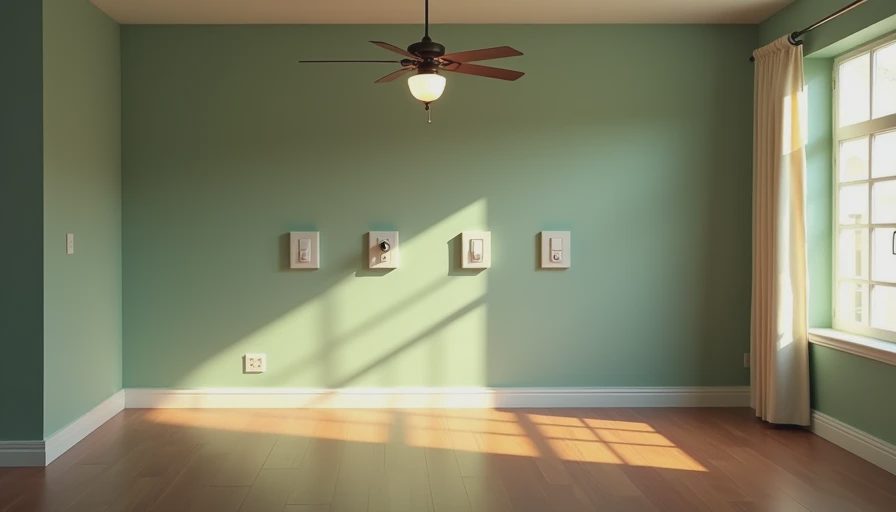
The light kit should solve a specific lighting problem. Many older ceiling fans with lights use a small central globe that produces a concentrated pool of brightness directly below the motor. That can be adequate in a bedroom, but it often leaves wall surfaces and room corners dim. Newer integrated LED designs tend to spread light through a broad diffuser, creating a cleaner appearance and more even illumination.
Look at color temperature before judging the fixture by its finish. A warm 2700K light feels relaxed and works well with wood floors, beige upholstery, and bedrooms. A neutral 3000K setting is often a flexible choice for living areas and kitchens. Cooler light can feel crisp in a garage or utility space, but it may make a warm residential interior appear stark. If the fixture offers selectable color temperature, choose one with a physical switch or reliable control rather than assuming every setting will be equally useful.
Color rendering also deserves attention. Color rendering index, or CRI, describes how naturally surfaces appear under a light source. A CRI of 90 or higher is a strong target for rooms where you notice artwork, food, textiles, or skin tones. You do not need to memorize every specification, but comparing CRI can explain why one inexpensive LED looks pleasantly clear while another makes paint and furnishings seem dull.
Match controls to daily habits
Controls determine whether the fixture remains pleasant to use. A wall control with separate fan-speed and light buttons is usually more dependable than a single pull chain, especially when the fan is over a bed or sofa. Remote controls are convenient for retrofits, and some ceiling fans with lights include app or voice control. Smart features can be useful, but only when the receiver, wall switch, and home network work together without confusion.
Dimming is particularly valuable because a light level that works for cleaning may feel harsh during dinner. Confirm that the LED module is dimmable and that the control is compatible with LED loads. If you are replacing a standard switch, use a fan-rated control designed for the motor. Never connect a motor to an ordinary light dimmer; the electrical behavior is different and the result can include humming, overheating, or unreliable speed changes.
Noise is another specification worth investigating. A quality motor should run quietly at low and medium speeds, but installation also matters. A loose canopy, unbalanced blade, or improperly secured mounting box can create a wobble or rhythmic clicking. The ceiling electrical box must be rated to support a fan, not just a lightweight light fixture. For a new installation, an electrician can verify the box, wiring, and control arrangement before the drywall or trim makes access difficult.
Use the fan as one layer of light
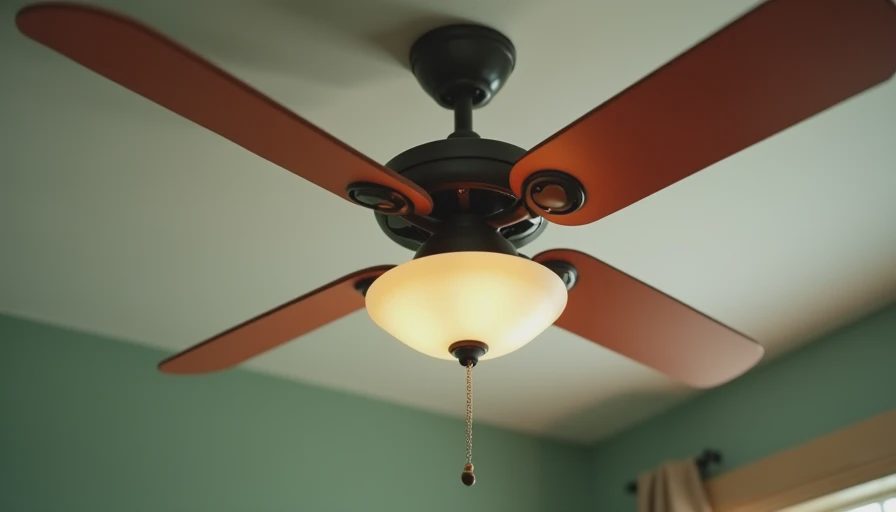
Ceiling fans with lights are rarely a complete lighting plan. The fixture is overhead, so it mainly provides ambient or general light. A room feels more comfortable when that overhead layer works with lamps, wall lighting, under-cabinet strips, or recessed fixtures. For example, a living room might use the fan light at a moderate level, a floor lamp beside a chair for reading, and a table lamp near a media console to add glow at eye level.
This layered approach also prevents the familiar flat, bright-ceiling effect. Light aimed only downward makes the floor visible but can leave vertical surfaces dull. A wall washer, picture light, or shaded lamp gives the eye something else to read. In a dining area, keep the fan light from competing with a pendant. You may prefer a low-glare fan light for general illumination and a separate pendant over the table for visual focus.
Pay attention to blade color and fixture scale as part of the room composition. A white fan can recede into a white ceiling, while a dark bronze or matte black model becomes a strong architectural line. Neither is automatically better. Match the finish to existing hardware, or deliberately use contrast when the ceiling is high enough to support a visible statement. The light diffuser should also coordinate with the room: frosted glass feels softer, while a smooth acrylic lens often looks more contemporary.
Common mistakes to avoid
The most common mistake is choosing a fan based on appearance alone. A beautiful 52-inch fixture will not perform well if it is installed in a narrow bedroom with a low ceiling. Another error is treating lumens as the only measure of quality. A bright source can still produce glare if the diffuser is exposed or the light is aimed straight into the eyes of people reclining below it.
Avoid placing a fan where an open door, tall cabinet, or bunk bed reduces clearance. On a porch, confirm that the product is rated for damp or wet conditions as appropriate; indoor-only construction is not a safe substitute. In a kitchen, keep blade movement away from tall cabinetry and make sure the light does not create reflections on glossy counters.
Finally, do not ignore maintenance. Dust collects on the top of blades and can make an otherwise quiet fan wobble. Clean blades gently, tighten visible hardware when needed, and replace a flickering LED module rather than living with intermittent light. If the fan has a proprietary light kit, check that replacement parts will remain available.
A practical buying sequence
Start by recording room dimensions, ceiling height, electrical box location, and the desired fan finish. Then select the blade span and mounting method. After that, compare light output, CRI, color temperature, dimming range, and diffuser design. Read the installation requirements before committing to a smart control or special downrod. This sequence keeps attractive styling from hiding a poor fit.
When comparing ceiling fans with lights, place the specifications side by side. One model might offer stronger airflow but a small, harsh light. Another might have a beautiful diffuser but lack a wall-control option. A third could provide adjustable color temperature and a quiet DC motor at a higher price. The best choice is the one that addresses the room's actual problem, not necessarily the one with the longest feature list.
In a recent living room consultation, the issue was not insufficient wattage; it was that every light source was concentrated overhead. Replacing the old fixture with ceiling fans with lights improved airflow and softened the ceiling glow, but the room only felt finished after a floor lamp and a low table lamp were added. That combination used less intensity from each source and created a more comfortable evening scene.
For most homes, ceiling fans with lights work best when their scale, light quality, controls, and mounting height are considered together. Measure first, choose the light behavior you want, and treat the fan as one layer in a larger design. The result should be a room that stays cool in summer, looks balanced during the day, and feels welcoming when the sun goes down.