The E12 vs E26 light bulb base question appears simple, but the wrong answer can leave you with a bulb that will not fit, a socket that looks awkward, or a fixture that produces the wrong amount of light. The good news is that the naming system is logical once you know what the letters and numbers mean. As a lighting engineer, I use this quick identification method whenever I review a renovation plan or help a homeowner troubleshoot a new chandelier.
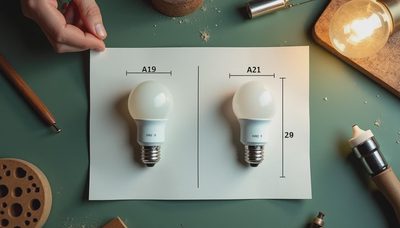
The letter E means Edison screw base. The number refers to the approximate diameter of the base in millimeters. Therefore, an E12 base is about 12 millimeters wide, while an E26 base is about 26 millimeters wide. That difference is substantial. These bases are not interchangeable, even though both bulbs screw into place.
E12 vs E26 light bulb base: The physical difference
An E12 bulb is commonly called a candelabra-base bulb. It has a narrow screw fitting and is usually found in decorative chandeliers, sconces, ceiling fans, small table lamps, and some night-lights. The bulb itself might be shaped like a flame, globe, tube, or small round capsule, but the base remains narrow.
An E26 bulb is the standard medium base used in most homes across the United States. It is the familiar size found in floor lamps, table lamps, pendant lights, recessed retrofit bulbs, vanity fixtures, and many outdoor lanterns. You may also see it described as a standard base or medium screw base.
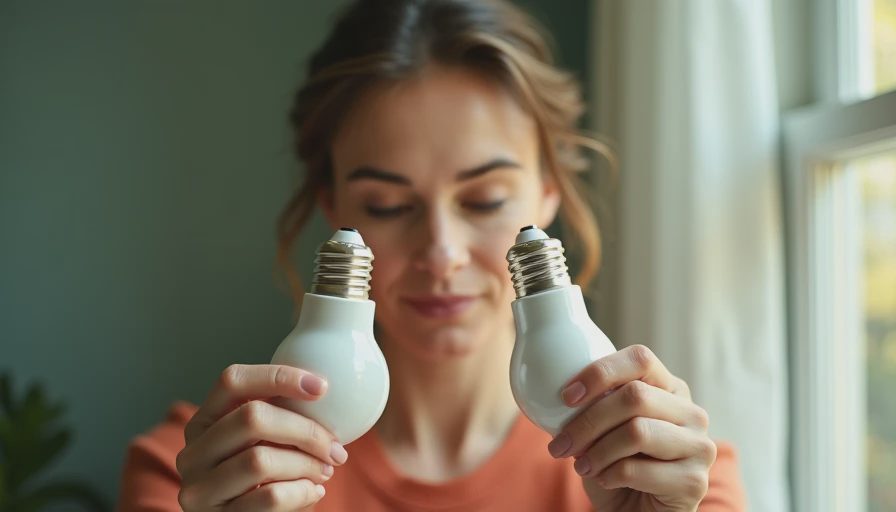
The most useful point in the E12 vs E26 light bulb base comparison is that bulb shape does not determine socket size. A large globe bulb can use an E12 base, and a compact LED can use an E26 base. Look at the metal screw portion, not the glass envelope, when identifying the fit.
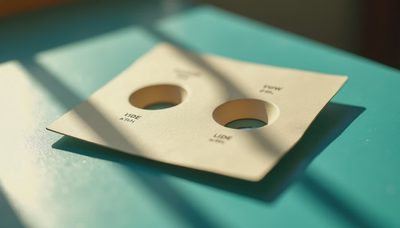
A simple visual test works when the old bulb is available. An E12 base looks close to the diameter of a pencil, while an E26 base is closer to the width of a U.S. quarter. Do not force a bulb that seems almost right. The threads can damage the socket, and a loose electrical connection can create flickering or excess heat.
Where each base works best in a room
The E12 vs E26 light bulb base choice affects more than installation. It also influences the kinds of fixtures and light sources available to you. E12 fixtures often support a decorative, multi-bulb look. A six-light dining chandelier may use six 40-watt-equivalent LED candelabra bulbs, producing sparkle without visually oversized lamps.
E26 fixtures offer much greater flexibility. You can usually choose from 60-watt-equivalent bulbs for general illumination, brighter 75- or 100-watt-equivalent LEDs for a reading corner, and specialty lamps with high color rendering. If a living room feels dim, an E26 floor lamp can accept a brighter bulb without changing the entire fixture.
Consider a kitchen island pendant as an example. A small pendant with an E12 socket may look elegant over a breakfast nook, where its job is mostly decorative. Over a large island, an E26 pendant gives you more options for output and beam spread. You can pair a clear filament lamp with a visible socket for atmosphere, or use an opaque LED globe for softer task light.
How to identify the correct base before buying
Start by turning off the fixture and allowing the old bulb to cool. Remove the bulb without twisting against resistance. Read the printing on the glass or metal; many lamps include the base designation, such as E12 or E26, near the wattage and voltage information.
Next, inspect the socket. A narrow socket with a small center contact is typically E12. A standard household socket is usually E26. If the fixture has no bulb, measure the inside opening with a ruler. The nominal numbers describe the base diameter, so measurement does not need to be perfect to separate a 12-millimeter base from a 26-millimeter one.
The E12 vs E26 light bulb base distinction can also appear in the fixture listing. Search for phrases such as candelabra socket, medium socket, E12, or E26. Product listings sometimes use inconsistent terms, so compare the written specification with the product photographs and installation manual. For a hardwired fixture, never assume that an adapter is the best solution; an adapter can change clearance, appearance, and heat behavior inside a shade.

Safety, brightness, and LED compatibility
Base size is only one part of a safe bulb choice. Check the fixture's maximum wattage, voltage, enclosed-fixture rating, and whether the fixture is dimmable. A 10-watt LED can produce the light of an older 60-watt incandescent bulb, but the fixture's label still matters. Never exceed its stated wattage limit.
LED bulbs are generally the easiest way to reduce heat and energy use. For living rooms and bedrooms, 2700K warm white usually feels comfortable and residential. In a kitchen or bathroom, 3000K can provide a cleaner appearance without becoming as blue as daylight bulbs. If color quality matters, look for a color rendering index, or CRI, of 90 or higher.
Dimming introduces another checkpoint. The bulb, dimmer, and fixture need to be compatible. A non-dimmable LED can flicker or fail when connected to a wall dimmer. Some E12 decorative bulbs also have unusual shapes that do not fit inside enclosed shades, so check the lamp dimensions as well as the base.
Common mistakes homeowners make
One frequent mistake is buying an E26 bulb because it is brighter, then discovering that the chandelier requires E12 sockets. Brightness is controlled by lumens, not base diameter. If an E12 chandelier feels too dim, select higher-lumen candelabra LEDs approved for the fixture rather than forcing a larger bulb.
Another mistake is assuming every small decorative bulb uses E12. Some compact lamps use E17 intermediate bases, GU10 twist-and-lock bases, or G9 pin bases. The E12 vs E26 light bulb base comparison cannot identify those alternatives, so inspect the socket shape before ordering a multipack.
A third mistake is ignoring the shade. A bulb may technically fit the socket but extend beyond the shade, creating glare. In a bedroom sconce, a frosted E12 bulb can hide the bright filament and produce a calmer result. In an open E26 pendant, a clear filament bulb may be intentional because the lamp is part of the visual design.
A practical buying checklist
Before placing an order, confirm the base type, bulb shape, lumen output, color temperature, dimmer compatibility, and fixture rating. If replacing several bulbs, buy one sample first. Install it, view the light from normal seating positions, and check whether the lamp fits beneath the shade or inside the glass.
For a dining room chandelier, E12 bulbs around 300 to 500 lumens each often provide attractive ambient light, depending on the number of sockets and room size. For a reading lamp with an E26 socket, an LED around 800 to 1,100 lumens is a more useful starting point. These are design starting points, not universal limits; the fixture label and the room's layered lighting plan still control the final choice.
When comparing online products, save a photograph of the socket and write down the old bulb's markings. That small record prevents a surprisingly common return trip. If the fixture is vintage, imported, or modified, have a qualified electrician inspect questionable wiring rather than relying on a loose adapter.
The E12 vs E26 light bulb base answer is straightforward: E12 is the narrow candelabra size, and E26 is the standard medium household size. Choose the base that matches the socket, then select brightness, color, shape, and dimming performance for the room. Once the fit is correct, the more interesting design decisions begin: whether the light should disappear into the architecture or become part of the room's character.