
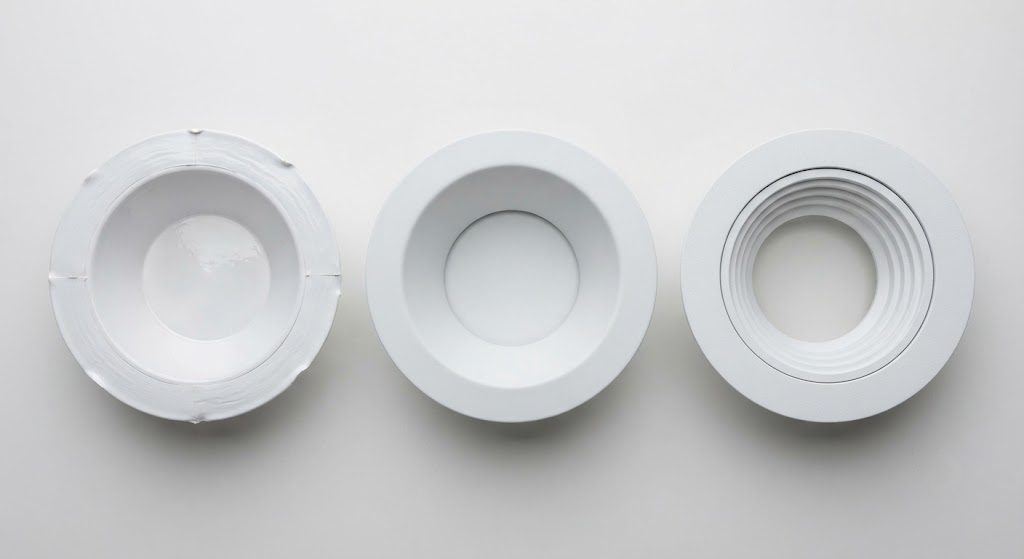
Walk into a lighting supplier and you'll find recessed trims at price points that don't seem to make sense. An 4-inch baffle trim for eight dollars. Another that looks almost identical for forty-five. A third for eighty, and you genuinely can't tell what the extra seventy-two dollars bought you. The differences are real, but they live in the details — and some of those details matter a lot more than others once the trim is installed in your ceiling.
I've specified thousands of recessed trims across my career, from builder-grade four-packs to custom-finished architectural units that cost more than some chandeliers. Here's what changes as you move up the price ladder, and whether the upgrade is worth it for the rooms you're lighting.
What the Price Buys You
A recessed trim has four jobs: control glare, manage the beam, dissipate heat, and look clean against the ceiling. As price increases, each of those jobs gets done better — but not at the same rate.
Baffle Design and Glare Control
The baffle is the ribbed interior surface you see when you look up at the trim. Its job is to trap and absorb stray light so it doesn't hit your eye directly — the same principle as the matte black hood inside a professional camera lens. At the budget level, the baffle is typically a shallow stamped metal cone with a few stamped ridges and a glossy black finish. It provides some glare reduction but reflects enough light to be visible as a bright ring in your peripheral vision.
Move to mid-range, and the baffle gets deeper. The ridges multiply and become more pronounced. The finish shifts from glossy to a true matte powder coat that absorbs light rather than bouncing it. The result is a darker aperture when the light is on — you see the light on the floor, not the fixture in the ceiling. This is the single biggest visual difference as you move up the price curve, and it's the reason I spec mid-range or better for any room where people will be seated — living rooms, dining rooms, bedrooms. The glare difference is immediate and physical.
At the premium tier, the baffle becomes an engineered optical surface with a multi-step texture and sometimes a micro-ribbed finish. The depth increases further, and the trim often includes a secondary internal cone that shapes the beam before it exits the aperture. These trims disappear into the ceiling when lit, even in rooms with high ceilings where the trim is more visible.
Color Consistency
A recessed trim and the housing it mounts into are often made by different manufacturers, or at least in different factories. Even when both are white, the whites rarely match. Budget trims frequently show a visible color difference against the housing flange — slightly warmer white, slightly cooler white, or a different sheen level.
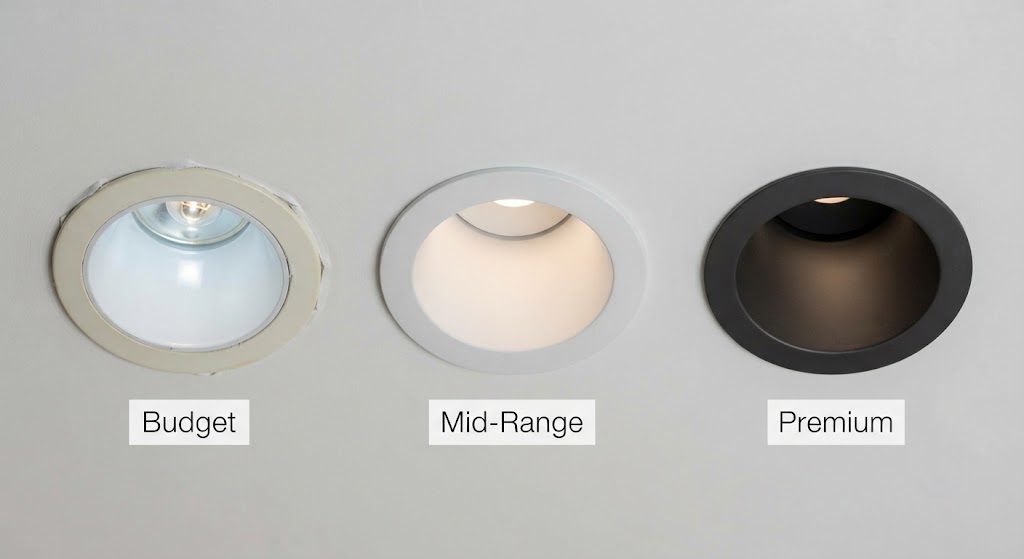
Premium trims solve this with either a powder-coat process that's matched to the housing manufacturer's white, or by being sold as a complete trim-and-housing system where color consistency is guaranteed. In a kitchen with eight recessed lights in a grid, one mismatched trim stands out like a thumbprint on a gallery wall. If you're installing more than four trims in a single sightline, the color consistency of mid-range or better pays for itself in visual quiet.
Build Quality and Heat Tolerance
LEDs generate heat at the driver, not the bulb tip, but that heat still rises into the trim and housing. Over hundreds of heat cycles, a budget trim with a thin-gauge metal flange and a plastic inner cone can warp, discolor, or develop a visible gap between the trim ring and the ceiling. The flange on an eight-dollar trim is often stamped steel thin enough to bend with finger pressure. The flange on a premium trim is die-cast aluminum with enough mass to sit perfectly flat against the ceiling indefinitely.
For a closet or a laundry room where the lights are on for ten minutes at a time, this doesn't matter. For a kitchen where the lights run four hours every evening, the heat cycling is real. Mid-range trims with a powder-coated aluminum flange and a steel baffle will hold their shape and color for the life of the housing.
Where to Spend and Where to Save
This is the practical answer I give clients who are staring at a lighting budget that doesn't stretch to premium trims in every room.
Save here: Closets, laundry rooms, utility spaces, hallways that aren't main sightlines, and kids' bedrooms where the trim will be replaced within a decade. The eight-dollar trim works fine for spaces where you're walking through, not sitting under.
Spend here: Kitchens, living rooms, dining rooms, master bedrooms, and any room with ceilings above 9 feet — because the higher the ceiling, the more of the trim interior is visible from standing and seated positions, and the deeper baffle of a mid-range or premium trim makes an outsized difference. Also spend on any room where recessed trims are installed in a visible grid pattern, because color mismatches multiply across multiple apertures.
The sweet spot: Mid-range trims at the twenty-five to forty-dollar mark deliver about eighty percent of the premium look — deep matte baffle, clean ceiling fit, good color consistency — without the premium price. Unless you're lighting a room for architectural photography or you have 12-foot ceilings where every detail is visible, mid-range is where the value lives.
The spec sheet guide I wrote earlier in this series applies here: look for the trim's listed compatibility with your housing, check the baffle finish description for "matte" or "powder coat," and if the manufacturer doesn't publish a color consistency spec, expect variation. The trim is the only part of the recessed light anyone actually sees. It's not the place to cut the corner.