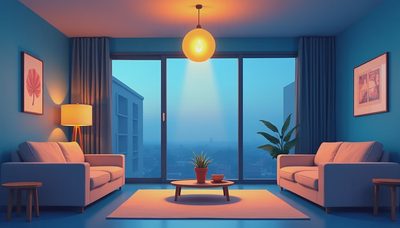
Hue bulbs are useful because they let you change more than brightness. You can shift color temperature, create scenes, and control several fixtures together without replacing every switch in the house. But smart lighting cannot rescue a poorly planned room. The best results come from deciding what the light needs to do first, then choosing where these lamps genuinely solve a problem.
I approach smart lighting the same way I approach a renovation plan: start with the visual tasks, identify the layers, and only then specify products. A living room should not depend on one ceiling fixture, whether that fixture uses traditional LEDs or hue bulbs. It needs ambient light for general visibility, task light for reading or conversation, and accent light to give walls, artwork, and shelves some depth.
What Hue Bulbs Actually Change
A standard LED lamp usually gives you one fixed color temperature and one brightness range. Hue bulbs add control over both. Warm white settings around 2,700 Kelvin can make a room feel relaxed in the evening, while cooler settings can provide a more alert character during daytime activities. Many models also produce colored light, although saturated blue or red is usually more effective as an occasional accent than as everyday illumination.
The important distinction is between changing the light source and changing the lighting design. Hue bulbs can make a bad location brighter, dimmer, or more colorful, but they cannot move light from a ceiling to a reading chair. If a sofa corner feels gloomy, a floor lamp beside the sofa will usually improve it more than adding another color scene to a distant pendant.
Think of smart control as a layer of flexibility on top of good placement. That is why a modest room with three carefully positioned lamps often feels better than a large room filled with expensive connected fixtures.
Where Smart Lamps Earn Their Place
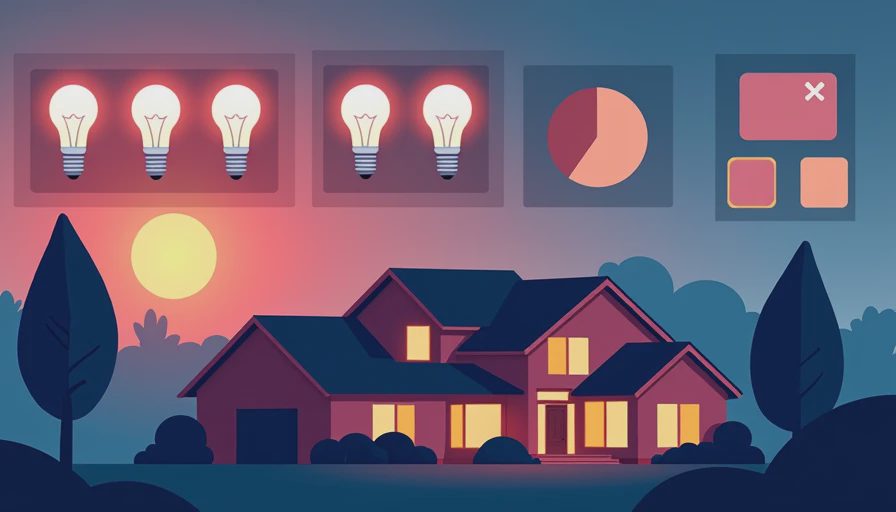
The easiest applications are fixtures that are difficult to reach or that need frequent mood changes. A table lamp behind a bookcase, a pair of lamps on a high console, or a pendant over a dining table can all benefit from wireless scheduling and scene control. Hue bulbs are especially practical when the fixture is decorative but the switch is inconveniently located.
Bedrooms are another strong use case. A bedside lamp can fade gradually in the morning instead of switching on at full output. In the evening, a warm, low setting supports a calmer atmosphere without leaving the room dark. In a home office, a brighter neutral-white scene can help separate work hours from the softer lighting used after dinner.
They are less compelling in every fixture. A bathroom vanity needs flattering, reasonably even light at the face, and color rendering matters more than animated colors. A kitchen countertop needs adequate task illumination without glare. In these areas, prioritize fixture position, diffusion, and a suitable color-rendering rating before paying extra for connectivity.
Build a Lighting Layer, Not a Collection of Gadgets
A reliable room plan usually has three layers. Ambient light provides the overall level, often through recessed downlights, a flush mount, or indirect illumination. Task light serves a specific activity, such as reading, cooking, shaving, or working at a desk. Accent light adds contrast by grazing a textured wall, highlighting artwork, or illuminating the interior of open shelving.
Hue bulbs can participate in any of these layers, but they are most valuable when one control adjusts several sources at once. For example, a living room scene might set a ceiling fixture to 35 percent, a floor lamp to 60 percent, and a picture light to 20 percent. Those different levels create a more comfortable visual hierarchy than setting every lamp to the same brightness.
Before buying, stand in the room after sunset and note the dark areas. If the walls disappear, add vertical illumination. If a chair is hard to use, add a local task lamp. If the room feels flat, add a low-level accent source. The shopping list should follow those observations, not the other way around.
Color Temperature and Color Rendering Matter
Color temperature describes whether white light appears warm or cool. A lower Kelvin value looks more amber; a higher value looks whiter or bluer. For most homes, 2,700K to 3,000K is comfortable for living areas. Some kitchens, offices, and utility spaces can work well at 3,000K to 3,500K, especially during the day.
Do not confuse adjustable color temperature with color rendering. Color rendering describes how naturally surfaces and objects appear under the light. A lamp can offer impressive color effects while still making wood, food, or skin tones look unappealing if its rendering performance is weak. For kitchens, bathrooms, dressing areas, and artwork, look for a high CRI or an equivalent manufacturer rating and judge the lamp in the actual fixture.
Hue bulbs are at their most convincing when their color settings support the room rather than announce themselves. A warm white evening scene, a gentle sunrise schedule, or a restrained amber accent often feels more sophisticated than a constantly changing rainbow effect.

Plan the Controls Before You Install
Smart lighting has two control paths: the electrical switch and the wireless interface. If someone turns off the wall switch, a connected lamp loses power and cannot respond to an app or voice command. That makes switch placement and household habits part of the design.
In a renovation, consider smart switches, scene controllers, or a dedicated wall remote so guests do not need a phone. In a rental, a wireless button near the entry can make a lamp easier to use without changing wiring. For larger installations, group fixtures by activity rather than by room alone. “Movie,” “dinner,” and “cleaning” are more useful scenes than a dozen separate lamp controls.
Also check the fixture. Enclosed shades, enclosed outdoor housings, dimmer compatibility, and maximum wattage limits can affect which bulbs are appropriate. Do not put a lamp in an enclosure unless the product instructions allow it, and avoid pairing a smart lamp with a conventional dimmer unless compatibility is explicitly confirmed.
A Practical Buying Sequence
Start by measuring the room and listing the activities that happen there. Mark the locations that need general, task, and accent light. Then decide which sources need scheduling, remote control, adjustable white light, or color effects. This usually reduces the number of connected lamps you need.
For a small living room, two smart table lamps and one floor lamp may deliver more useful flexibility than six identical ceiling lamps. For a dining area, one connected pendant can provide dinner, cleaning, and entertaining scenes, while a separate wall or cabinet light adds depth. For a bedroom, prioritize bedside control and a gentle low-level setting over dramatic color output.
Hue bulbs can be an excellent upgrade when they are assigned a clear job. Use them to solve access, timing, brightness, or atmosphere problems. For a room that still feels harsh or gloomy, examine the placement and layering first. Then choose the smart features that make a well-designed lighting system easier to live with every day.