
A smart light switch can do much more than turn a lamp on from your phone. Used thoughtfully, it lets you control brightness, create schedules, and build a lighting system that supports how a room is actually used. The important question is not simply which model has the most features. It is which control solves a real lighting problem without making the wall, wiring, or evening atmosphere more complicated.
Start with the Room, Not the Gadget
Before buying a smart light switch, stand in the room after sunset and observe what feels wrong. Is the ceiling fixture too bright when you are watching television? Does the kitchen need useful light early in the morning but softer light after dinner? Are you walking through a dark hallway because the existing switch is in an inconvenient location?
These observations determine the right solution. A dimmer is useful when the fixture is suitable for dimming and the problem is excessive brightness. A switch with scheduling is helpful for a porch or entry, where consistent operation matters. A multi-location system can improve a long hallway or stairway, but only if you identify every control point before opening the wall.
Lighting works best in layers. Ambient light establishes general visibility, task light supports an activity, and accent light adds depth. A smart control should strengthen those layers rather than encourage you to run one intense ceiling fixture for everything. In a living room, for example, a dimmable overhead fixture, a floor lamp, and a small picture light can create a more comfortable scene than one expensive switch operating a single source.
Check Wiring and Electrical Compatibility
The most common installation mistake is selecting a smart light switch before checking the electrical box. Many connected switches require a neutral wire, which carries current back to the electrical panel even when the light is off. Older homes sometimes lack that conductor in the switch box. Some products are designed to work without a neutral, but they can have limitations involving minimum load, flicker, or compatibility with LED lamps.
You also need to know whether the box contains one switch, two switches, or a three-way arrangement. A three-way circuit lets two switches control one fixture, such as a stair light. Not every smart light switch can replace either device in that arrangement, and some systems require a companion remote or dedicated accessory at the second location.
Confirm the circuit rating, bulb type, and fixture load. A dimmer intended for LED lamps is usually the safer choice for modern residential lighting than an older incandescent-only dimmer. If the box is crowded, measure its depth before purchasing. Smart controls are often deeper than standard switches, and forcing one into a shallow box can damage wiring or leave the faceplate uneven.
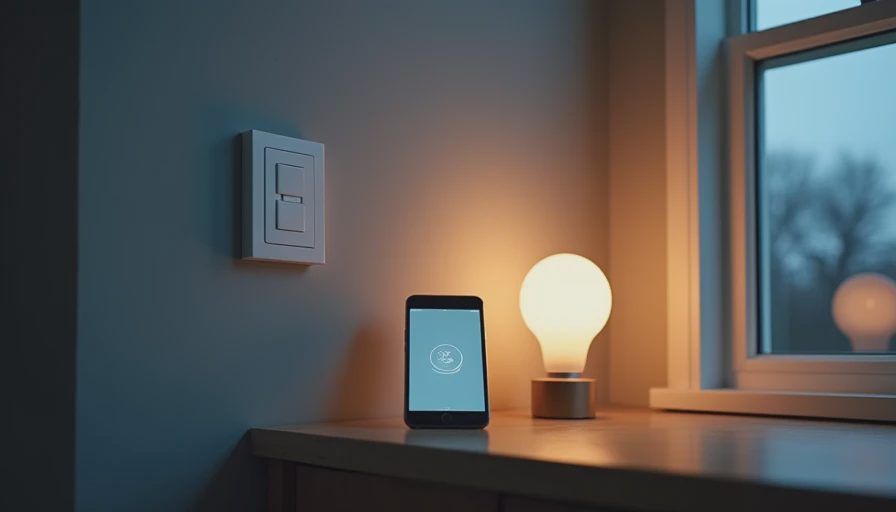
Turn off the breaker, verify that power is absent with an appropriate tester, and photograph the existing wiring before disconnecting anything. If the wiring does not match the installation instructions, stop and use a licensed electrician. The few dollars saved by guessing are not worth an overheated connection or a failed inspection.
Choose Dimming and Color Carefully
A smart light switch cannot fix a poor light source. If the LED lamps are harsh, greenish, or visibly flicker when dimmed, replacing the control alone will not create beautiful light. Look for lamps with a color temperature suited to the room. A range near 2700K often feels warm and residential, while 3000K can provide a cleaner appearance in kitchens and bathrooms. Color rendering index, or CRI, describes how naturally colors appear under the light; a CRI of 90 or higher is a useful target for living areas, kitchens, and dressing spaces.
Dimming behavior matters as much as the lowest percentage printed on the package. Some LEDs jump from bright to nearly off, while others dim smoothly through a useful range. A quality smart light switch can make a compatible lamp more flexible, but compatibility lists are worth reading. Brands such as Lutron, Leviton, and TP-Link offer different approaches to hub requirements, app control, and smart-home integration. Their product families are not interchangeable simply because they all connect to Wi-Fi or a voice assistant.
For a bedroom, a gradual fade can be more comfortable than an instant blast of light. For a vanity, reliable brightness and accurate color matter more than elaborate scenes. Match the feature to the visual task.
Plan Controls Around Human Movement
Good control placement follows the way people enter, sit, work, and leave. Put the primary switch where a person naturally reaches before entering the room, not where the old switch happens to be if a renovation gives you a better option. In a kitchen, separate under-cabinet task lighting from general ceiling lighting so chopping vegetables does not require illuminating the entire room.
A smart light switch becomes especially useful when paired with scenes. A “cook” setting might run ceiling lights at full output and cabinet lights slightly lower. An “evening” setting could reduce the ceiling fixture while leaving a warm floor lamp and wall light active. A “cleaning” scene can restore full brightness without permanently making the room feel like a workshop.
Use sensors selectively. A motion sensor is excellent in a laundry room, pantry, or hallway, but it can be irritating in a living room where people sit still. Occupancy detection should support convenience, not replace deliberate control everywhere. In a bathroom, a short vacancy delay prevents the light from switching off while someone is showering.

Compare Connected Features Before Buying
A Wi-Fi smart light switch connects directly to the home network, which can simplify installation but adds another network device. A hub-based system uses a separate bridge for communication and can offer more reliable coordination across many controls. Bluetooth models can be inexpensive and responsive nearby, but remote access may require an additional gateway.
Decide whether you need voice control, remote access, scheduling, energy monitoring, or integration with a larger platform such as Apple Home, Google Home, or Amazon Alexa. If you only want a timer for the porch, an inexpensive programmable control may be more sensible than a feature-heavy product. If you are renovating an entire house, consistency within one ecosystem usually matters more than saving a small amount on the first switch.
Also consider the physical experience. Does the paddle feel precise? Is the indicator light too bright at night? Can guests operate it without opening an app? The best connected control still behaves like a familiar wall switch when the phone is unavailable.
A Practical Installation and Design Sequence
Begin by listing each fixture, its lamp type, and every switch location. Mark which lights should dim together and which should remain independent. Then confirm neutral-wire availability, circuit type, box depth, and product compatibility. This simple inventory prevents the common mistake of buying three controls that cannot share one circuit or scene.
Install one test location before ordering a houseful of devices. Use it for several evenings and pay attention to startup delay, LED flicker, app reliability, and how often you actually use the advanced features. If the control passes that test, repeat the design consistently in nearby rooms.
Finally, set scenes based on activities rather than technology. A good “movie” scene reduces glare on the screen, keeps a safe path through the room, and leaves enough low-level illumination to find a drink. A good “morning” scene provides clear, comfortable light without making the whole house feel fully awake. That is the real value of a smart light switch: not novelty, but better timing, better brightness, and a room that feels intentional after dark.