If you are wondering how high should a bedside lamp be, start with the light source rather than the lamp base. In most bedrooms, the bottom of the lampshade should sit around eye level when you are seated in bed. That usually places the shade at 24 to 30 inches above the top of the mattress, depending on your bed height, mattress thickness, and preferred reading position.
There is no single number that works in every room. A low platform bed, a tall traditional bed, and an adjustable hospital-style base all change the relationship between your eyes and the bulb. The goal is simple: useful light for reading without seeing glare, knocking the lamp with your shoulder, or creating a top-heavy arrangement on the nightstand.
The measurement that matters most
The most useful answer to how high should a bedside lamp be comes from measuring from the mattress, not the floor. Sit against your pillows in your normal reading position. Have someone measure from the floor to your eye level, then compare that height with the bottom edge of the lampshade. Ideally, the shade's lower edge will be close to your seated eye line or slightly below it.
For many adults, that means a lamp around 24 to 30 inches tall, measured from the nightstand surface to the top of the shade. A 24-inch lamp often suits a lower modern bed, while a 28- to 30-inch lamp can look more proportional beside a taller upholstered headboard. The lamp does not need to match the headboard height. It needs to relate to your eyes, the mattress, and the surface supporting it.
A useful test is to turn the lamp on while sitting in bed. You should see the page or e-reader clearly, but you should not see the bare bulb from your usual position. If the bulb is visible, choose a taller shade, a deeper shade, or a lamp with a lower socket. If the light feels trapped beneath the shade, raise the lamp slightly or use a lighter shade material that allows more diffusion.
Bedside lamp height by bed style
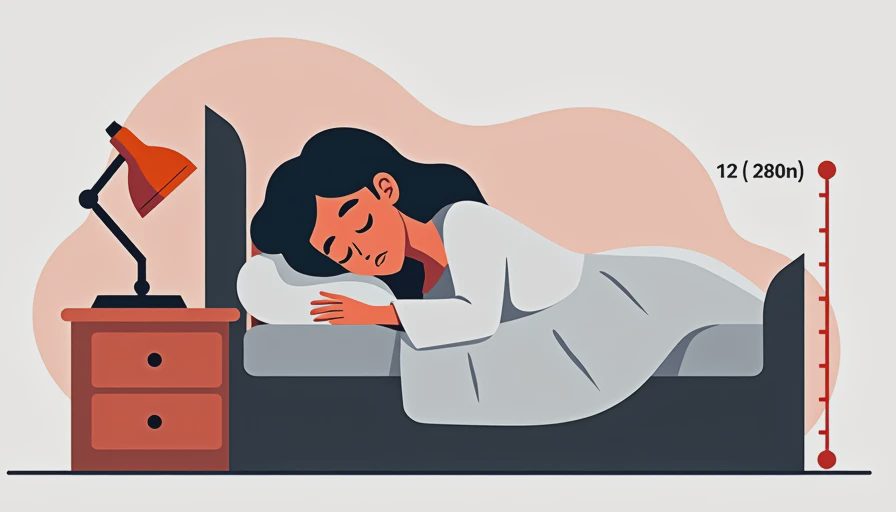
A standard mattress usually sits 24 to 26 inches above the floor, but platform beds can be closer to 18 inches and tall beds can exceed 30 inches. This is why how high should a bedside lamp be cannot be answered by lamp height alone. The nightstand itself is part of the calculation.
For a low platform bed, use a shorter nightstand and a lamp approximately 20 to 26 inches tall. A very tall lamp beside a low bed can make the whole wall feel visually crowded. For a conventional bed, a 24- to 28-inch lamp is a reliable starting point. On a tall bed with a thick mattress and box spring, a 28- to 32-inch lamp may provide better balance and put the shade at a comfortable eye level.
If your nightstand is much higher or lower than the mattress, adjust the lamp accordingly. A nightstand that is level with the top of the mattress is usually easiest to light because the lamp base does not need to compensate for a large height difference. If the table is six inches below the mattress, add roughly six inches to the lamp height before judging the result.
Symmetry also matters. Matching lamps on both sides of the bed are not mandatory, but their shades should usually reach a similar height. Two different lamps can work when their visual weight, shade width, and light output are comparable. A narrow ceramic lamp beside a large linen drum shade will often look unbalanced even if both are technically the same height.
Choose the shade before chasing the number
People often focus on how high should a bedside lamp be and overlook shade design. The shade controls glare, spread, and the apparent size of the fixture. A drum shade produces broad, comfortable light, while a tapered shade can direct more light downward onto a book. Opaque metal shades reduce glare but create a tighter pool of light. Linen and paper shades soften the bulb and are often easier on tired eyes.
For reading, look for a shade wide enough to distribute light across the bed without extending so far that you bump it. As a starting point, the shade diameter can be close to the width of the lamp base, or slightly wider. A three-way LED bulb or dimmable LED lamp gives you more control than a single bright setting. Around 800 lumens is often sufficient for reading at one bedside, although the shade material and room color will change how bright it feels.
Color temperature affects comfort as well. A warm 2700K LED creates a relaxed bedroom atmosphere, while a 3000K source can make print easier to read without feeling as cool as daylight. Look for a high color rendering index, ideally 90 or higher, if you want fabrics, wood, and skin tones to look natural under the lamp.
A simple bedside lighting test
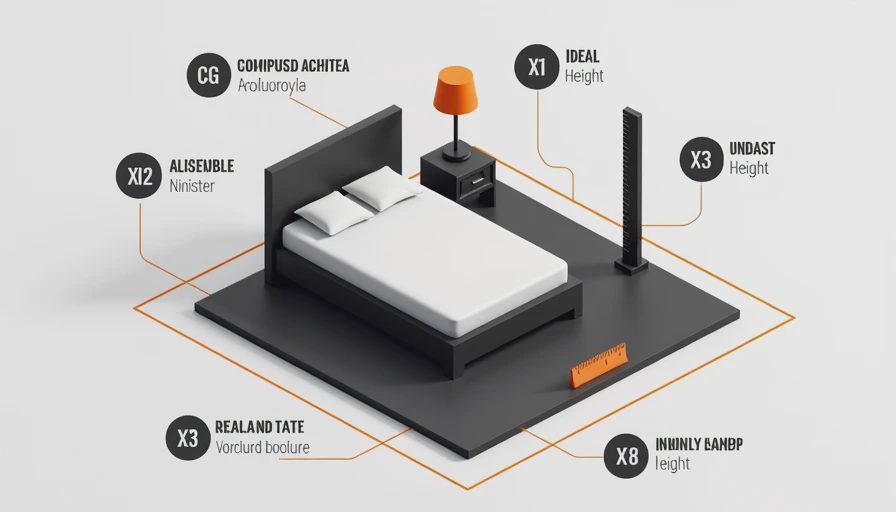
To decide how high should a bedside lamp be in your own room, place the lamp on the nightstand before installing anything permanently. Sit in bed, lean back against the pillows, and open the book or tablet you actually use at night. Check whether the shade blocks the bulb from your eyes and whether the light reaches the page without forcing you to lean toward the table.
Next, check the switch. You should be able to reach it without twisting your shoulder or leaning across the mattress. A lamp with a rotary switch near the socket can be awkward if the shade is tall. A pull chain, touch control, or cord-mounted switch may solve the access problem, but avoid controls that glow brightly in a dark bedroom if you are sensitive to small lights.
Look at the lamp from the doorway, too. The shade should not disappear completely behind the headboard, and the base should not dominate the nightstand. Leave room for a phone, water glass, and perhaps a small object such as a clock. A lamp that is technically correct but leaves no usable surface will not work well in daily life.
Common mistakes and better fixes
One frequent mistake is buying a lamp based on its total height without considering the shade's bottom edge. A 26-inch lamp with a high socket may place the bulb directly in your sightline, while a 24-inch lamp with a deep shade may hide it comfortably. Judge the illuminated fixture, not just the product listing.
Another mistake is using a lamp that is too small for a large nightstand. A tiny 12-inch lamp can look lost beside a king-size bed and provide weak, narrow light. On a large table, consider a lamp with a 16- to 20-inch shade diameter and enough output for reading. On a narrow table, choose a compact base and a vertical shade so the fixture does not crowd the wall.
Finally, avoid making both sides identical when the room does not need symmetry. If one side has a reading chair or a taller nightstand, a slightly different lamp can serve that function better. Keep the light color and overall visual weight coordinated, then let each fixture fit its job.
The practical answer for most bedrooms
So, how high should a bedside lamp be? Begin with a lamp whose bottom shade edge is near your seated eye level, commonly 24 to 30 inches above the mattress and roughly 24 to 28 inches tall on an average nightstand. Then adjust for your bed height, shade depth, reading posture, and the location of the switch.
Think of the lamp as one layer in the bedroom rather than the entire lighting plan. A dimmable bedside fixture handles close tasks such as reading, while a ceiling fixture or wall light provides general illumination and a low-level accent light can help with nighttime movement. When the lamp hides the glare, lights the page, and leaves your nightstand usable, the measurement is doing its job. That is the point of asking how high should a bedside lamp be: not to follow a rigid rule, but to create light that feels effortless.