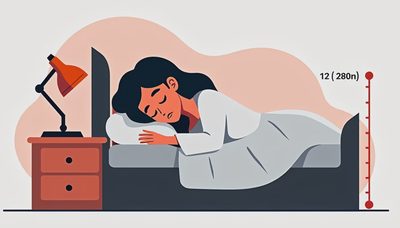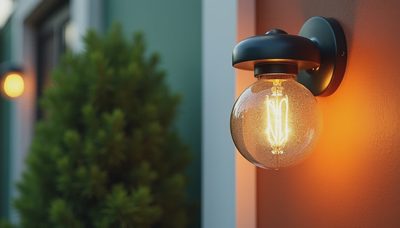
The nightstand lamp height rule is a useful starting point for choosing bedside lighting that feels comfortable rather than accidental. The goal is not to make the lamp mathematically perfect. It is to position the shade so the light supports reading, relaxing, and moving around the room without shining directly into your eyes. A few measurements, plus an understanding of how your bed is used, will get you much closer than shopping by appearance alone.
The basic nightstand lamp height rule
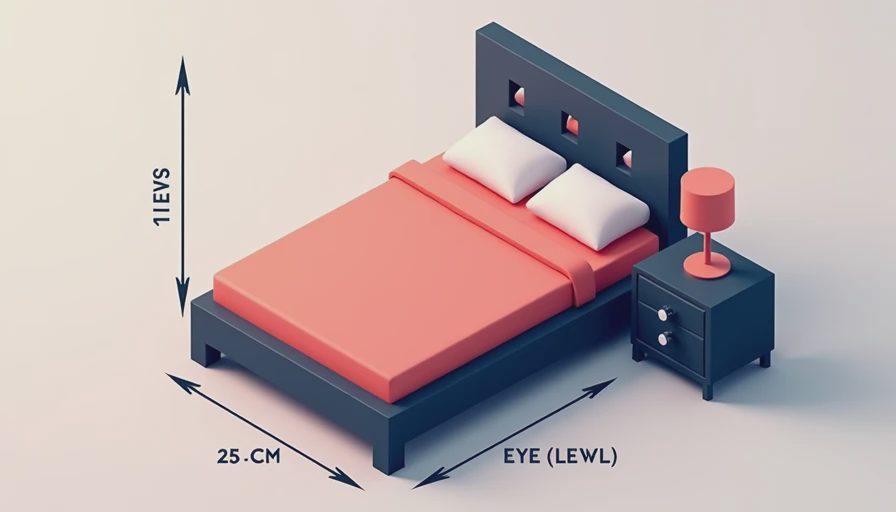
When you are sitting upright in bed, the bottom of the lampshade should usually be close to eye level. In practical terms, the total lamp height is often about 24 to 28 inches, measured from the tabletop to the top of the shade. That range works well with many standard beds and nightstands, but your mattress height and sitting position matter more than a fixed number.
The nightstand lamp height rule works because the shade blocks the bright bulb from your direct line of sight. If the lamp is too short, you look down into the bulb whenever you reach for a book or turn toward the nightstand. If it is too tall, the shade can sit above your eye line and send glare across the room. Neither problem is solved by choosing a more expensive lamp.
Start by measuring from the floor to the top of the mattress, then measure the height of the nightstand. A typical mattress may sit 24 to 27 inches above the floor, while a common nightstand is 24 to 28 inches tall. If the top of the table is already near mattress height, a lamp around 24 inches tall is often a strong first choice. A 30-inch lamp may be better on a low platform bed or a particularly low table.
Adjust the lamp for how you use the bed
Reading in bed requires a different approach from using the lamp only as a soft accent. For reading, place the bottom of the shade near the level of your shoulder or slightly above it when you are seated against the headboard. This keeps the bulb hidden while allowing useful light to fall onto the pages. The nightstand lamp height rule should be treated as a sightline test, not a rigid furniture formula.
Imagine sitting in your normal reading position with two pillows behind your back. Ask someone to stand at the foot of the bed and look toward you. If the bulb is visible below the shade, raise the lamp or choose a taller shade. If the entire shade disappears behind your head, lower the lamp slightly. This simple test is more reliable than judging the lamp while standing beside the bed.
Your shade shape also changes the result. A drum shade spreads light broadly and usually produces a calm, even glow. A tapered shade can direct more light downward, which is helpful for reading but can feel narrow on a large nightstand. Fabric shades soften the source; clear glass or exposed bulbs need more careful placement because they create stronger points of brightness.
Match the lamp to the nightstand
Proportion matters as much as height. A tiny lamp on a wide six-drawer nightstand can look lost, while a large ceramic base may crowd a narrow table and leave no room for a phone, water glass, or book. For many bedrooms, a lamp base and shade with a combined width of roughly 12 to 18 inches feel balanced on a 24- to 30-inch-wide nightstand.
The nightstand lamp height rule is easier to apply when the tabletop is not overloaded. Leave several inches between the lamp base and the table edge, especially if the table has drawers that open toward the bed. A compact lamp with a 10-inch-wide shade may be more practical than a fashionable oversized fixture if you regularly reach across the surface in the dark.
For a pair of lamps, symmetry is usually the safest choice, but identical lamps are not mandatory. Matching the height and visual weight is enough. You could use two brass bases with different subtle textures, or two lamps with the same shade profile in different materials. Keep the light source and shade height consistent so one side of the bed does not feel noticeably brighter.

Choose the right bulb and shade
Correct height cannot compensate for a harsh bulb. A bedside lamp often works well with a warm white LED in the 2700K to 3000K range. The lower end creates a more relaxed bedroom atmosphere, while 3000K gives a little more clarity for reading. Look for a high color rendering index, commonly called CRI, if you want books, bedding, and skin tones to appear natural.
Use the shade to control brightness. An opaque shade hides the bulb and directs light through the top and bottom openings, while a translucent linen shade produces a softer glow through the material. If your lamp feels glaring even at the right height, try a lower-lumen bulb, a frosted LED, or a shade with denser fabric before replacing the entire fixture.
A dimmer is particularly valuable beside a bed. Bright light helps with reading or finding clothing, but a lower setting is better when one person is sleeping. Choose a dimmable bulb and compatible control, then test the lowest setting for flicker. Smart bulbs from brands such as Philips Hue or LIFX can add scheduling and app control, although a simple plug-in dimmer is often less expensive and easier to operate.
Common placement mistakes
One frequent mistake is measuring the lamp from the floor instead of from the tabletop. The height that matters is the distance from the nightstand surface to the shade and bulb. Another is choosing a lamp based on its standing appearance. A fixture can look elegant when viewed from across the bedroom but become uncomfortable when you are lying down and looking directly toward it.
Avoid placing the lamp so close to the headboard that the shade touches fabric or decorative trim. Leave enough room for ventilation around LED electronics and enough clearance to prevent the cord from being pinched. Keep cords away from walking paths, and do not hide a power strip under bedding where heat can build up.
A wall-mounted sconce can solve many space problems. Install it beside the headboard with the switch reachable from bed, and select an adjustable arm if reading is important. The same sightline principle still applies: the light source should be shielded from your eyes while the beam reaches the page.
A practical test before you buy
Before ordering a lamp, make a quick cardboard mock-up or stack books to represent the proposed height. Sit on the bed, recline, read a few pages, and look toward the nightstand from several angles. Test both sides if your bedroom has different wall conditions. This takes five minutes and can prevent the common mistake of returning a lamp that looked perfect online.
For a typical 25-inch nightstand beside a standard-height bed, begin with a 24- to 27-inch lamp, a shade about 12 to 16 inches wide, and a warm dimmable LED. Adjust upward for a low bed or downward for a high mattress and tall nightstand. The nightstand lamp height rule is a framework, not a commandment; your seated eye level is the final judge.
Good bedside lighting should disappear into the routine of the room. You should be able to read without squinting, turn off the light without stretching, and wake during the night without facing a bare bulb. Measure the table, test the sightline, and choose the lamp that makes those actions feel effortless.