
A ceiling fan light has to do two jobs at once: provide useful illumination and remain comfortable while air moves around the room. Choosing dimmable LED bulbs for ceiling fan fixtures is not simply a matter of finding the brightest lamp that fits the socket. The bulb must match the fixture, the dimmer, the fan's electrical design, and the way you use the room.
I approach this choice by starting with the problem the light needs to solve. In a bedroom, that could mean soft evening light rather than a harsh overhead glare. In a kitchen or living room, you may need enough output to read, clean, or host dinner. Once you understand those requirements, the specifications on the package become much easier to interpret.
Start with the socket and fixture
Before comparing color temperatures or smart features, remove the existing bulb and identify its base. Many residential ceiling fans use an E26 medium base, while compact fans and some decorative fixtures use an E12 candelabra base. The base must match exactly; an adapter can change the fit, but it can also create clearance and heat problems inside a small shade.
Next, measure the bulb envelope. A fan light may accept a standard A19 shape, a smaller A15 bulb, or a decorative G16.5 globe. Look for the fixture's maximum wattage and any enclosed-fixture warning. LEDs consume less electricity than incandescent lamps, but they still need a suitable thermal environment. A bulb that physically fits can still overheat if its electronics are trapped under a tight glass bowl.
The moving blades also matter. A bulb with a loose base, poor internal construction, or an oversized heat sink can vibrate, buzz, or contact the shade. Choose a lamp labeled for ceiling fan use when possible, particularly for a fan that runs several hours each day.
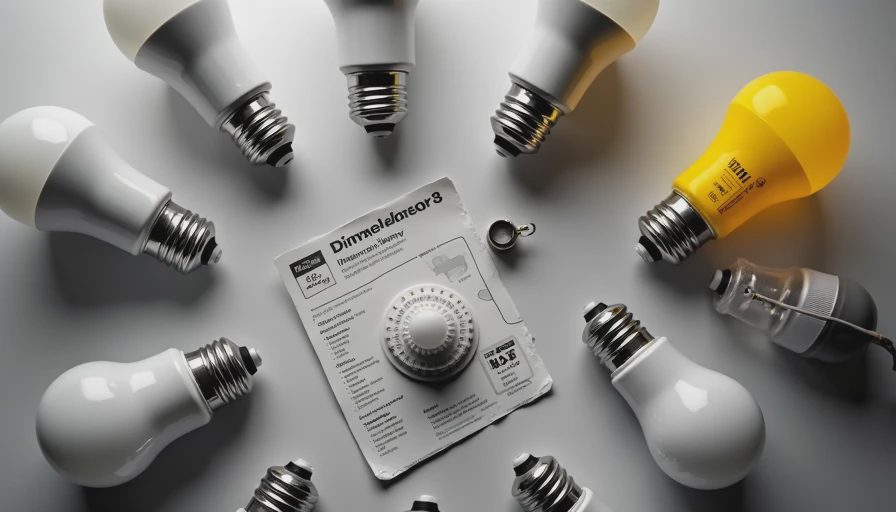
Understand brightness before buying
For LED bulbs, brightness is measured in lumens rather than watts. Watts describe energy use; lumens describe visible light. A typical 800-lumen bulb is roughly comparable to an old 60-watt incandescent lamp, while a 1,100- to 1,600-lumen bulb can provide noticeably stronger general light. A three-light fan fixture with 800-lumen bulbs therefore produces a very different room than a single-bulb fixture with the same lamp.
Dimmable LED bulbs for ceiling fan fixtures should have enough output at full power for the room, because dimming cannot create brightness that the bulb does not produce. For a small bedroom, 800 lumens per socket may be comfortable. A larger family room with a dark ceiling, wood finishes, or a deep glass bowl may benefit from 1,000 lumens per socket, provided the fixture is rated for it.
Avoid choosing maximum brightness automatically. Three very bright bulbs aimed through clear glass can make a room feel exposed and produce sharp shadows on faces. Frosted bulbs spread light more evenly, which is usually a better choice for a central fan fixture.
Choose color temperature and CRI deliberately
Color temperature describes whether light looks warm or cool. It is measured in kelvins, or K. Bulbs around 2700K have a warm, amber quality similar to traditional incandescent light. At 3000K, the light remains warm but looks a little cleaner. Bulbs at 4000K appear cooler and more energetic, which can work in a utility room but often feels clinical in a bedroom or lounge.
For most living rooms, dining rooms, and bedrooms, I start with 2700K or 3000K. If the ceiling fan serves an open kitchen and living area, 3000K can bridge the two spaces without making the seating area feel blue. Keep the same color temperature throughout connected rooms unless you have a deliberate design reason to vary it.
CRI, or color rendering index, describes how naturally colors appear under the bulb. A CRI of 80 is common and acceptable for general use. A CRI of 90 or higher is preferable where you care about upholstery, artwork, food, or skin tones. Dimmable LED bulbs for ceiling fan fixtures with high CRI can make a modest room feel more considered without changing the fixture itself.
Solve flicker, buzzing, and dimmer problems
The most common frustration with dimmable LEDs is not insufficient light; it is unstable light. Flicker can result from a bulb that is not truly dimmable, a dimmer designed for incandescent loads, or a combination of bulbs and controls that do not communicate well. Buzzing may come from the dimmer, the bulb electronics, or vibration from the fan.
Read the bulb package for compatibility language. Terms such as “dimmable” and “works with LED dimmers” are useful, but they do not guarantee perfect results with every control. If you are replacing a wall control, an LED-rated dimmer from Lutron or Leviton is a practical starting point. Follow the manufacturer's instructions and confirm that the circuit is wired correctly.
A fan with an integrated light kit can be more complicated. Some models use a proprietary remote, a built-in receiver, or a limited light-level setting rather than a conventional wall dimmer. In that situation, the fan manual is more important than a generic bulb recommendation. Install one compatible bulb first and test it at low, medium, and full output before buying a complete set.

Decide whether smart bulbs are worthwhile
Smart bulbs can be useful when the fan light is difficult to reach or when you want schedules, voice control, or scene settings. Products from Philips Hue, WiZ, and GE Cync offer app-based control in different ecosystems. However, a smart bulb needs continuous power. If someone turns off the wall switch, the bulb cannot receive commands until power returns.
That limitation makes smart bulbs less convenient in households where a physical switch is used constantly. A smart wall switch or a fan system designed for smart control may provide a more reliable experience. Also check whether the bulb is compatible with the fan's remote receiver. Combining a wireless fan controller with a separate smart bulb can create confusing controls and unexpected resets.
For many rooms, a quality conventional LED with a compatible wall dimmer is simpler, faster, and less expensive. Smart features solve a specific control problem; they should not be added merely because the bulb package advertises them.
My practical selection process
When I specify dimmable LED bulbs for ceiling fan fixtures, I use a short sequence. First, I confirm the base, bulb shape, fixture clearance, and maximum wattage. Second, I choose the lumen output based on room size and the number of sockets. Third, I select 2700K or 3000K for most residential spaces, then look for CRI 90 if color quality matters.
Fourth, I verify that the bulb is dimmable and that the existing control is LED-compatible. If the fan has a remote, I check the manual for its minimum and maximum load. Finally, I buy one or two bulbs before committing to a full box. Testing reveals issues that a package cannot: visible flicker during video recording, an annoying buzz at half brightness, or a shade that traps too much heat.
The best result is not the bulb with the longest feature list. It is a stable, quiet light that dims smoothly, renders the room's colors naturally, and supports the fan without drawing attention to itself. Once those fundamentals are right, the fixture can do what good lighting should do: make the room feel comfortable before you consciously notice why.