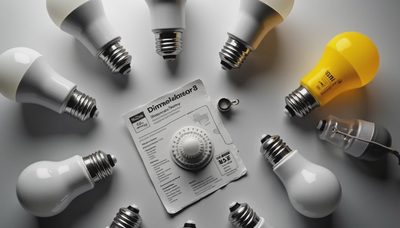
Energy saving light bulbs are not simply a utility-saving substitute for old incandescent lamps. They are design tools. The right bulb can make a kitchen countertop easier to work on, a hallway feel welcoming, and a bedroom quieter at night. The wrong one can make even an expensive room look gray, harsh, or strangely blue. As a lighting engineer, I start with the room’s job, then choose the lamp that supports it.
The most useful shift is to stop shopping by wattage alone. Watts measure electricity use, not brightness. Instead, look at lumens, color temperature, color rendering, dimming behavior, and the shape of the lamp. Those details explain why two bulbs that look similar on a shelf can feel completely different in your home.
Start with lumens, not watts
Lumens tell you how much visible light a bulb produces. A traditional 60-watt incandescent bulb produces roughly 800 lumens, while an LED can produce similar brightness using about 8 to 10 watts. That difference is where much of the household energy savings come from. You get comparable illumination with less electricity and less heat released into the room.
For a bedside lamp, 450 to 800 lumens is often sufficient. A table lamp in a living room might use 800 to 1,100 lumens, especially if the shade blocks some output. A kitchen ceiling fixture may need several thousand total lumens, divided among multiple bulbs or integrated LED modules. These are starting points rather than rules; dark finishes absorb light, while pale walls reflect it.
Replacing ten 60-watt incandescent bulbs with 9-watt LEDs cuts connected lighting load from 600 watts to 90 watts. If those lamps run for three hours daily, the difference is about 558 kilowatt-hours per year. Your exact savings depend on local electricity rates and usage, but the operating-cost improvement is easy to understand.

Color temperature changes the mood
Color temperature is measured in Kelvin, abbreviated K. Lower numbers look warmer and more amber; higher numbers look cooler and bluer. Most homes work best when color temperature follows the room’s purpose instead of being identical everywhere.
Choose 2,700K for a warm living room, dining room, or bedroom. It resembles the familiar glow of incandescent light and works well with wood, warm paint, and soft textiles. A 3,000K bulb is a useful middle ground for kitchens, bathrooms, and homes that feel better with a cleaner white without looking clinical. Around 4,000K can suit a laundry room, garage, workshop, or detailed task area, but it often feels too cool for relaxed living spaces.
Consistency matters as much as the individual choice. If recessed lights around a kitchen are 3,000K but the pendant over the island is 2,700K, the difference can be distracting. It is not always wrong to mix temperatures, but do it intentionally. For example, warm accent lighting can contrast pleasantly with a slightly cooler task light when each layer has a clear job.
CRI matters when color needs to look real
Color rendering index, or CRI, describes how accurately a light source reveals colors compared with a reference source. A bulb with a CRI of 80 is common and adequate for many general applications. A bulb rated 90 or higher is preferable where color judgment matters, such as a kitchen, bathroom vanity, art wall, closet, or dressing area.
This is one reason energy saving light bulbs with strong specifications can feel much better than the cheapest option in a multipack. Under a low-quality lamp, tomatoes can look dull, skin can appear gray, and navy clothing can be difficult to distinguish from black. A high-CRI lamp does not make colors artificially vivid; it allows more of the visible spectrum to reach your eyes.
Look for the CRI rating on the package rather than assuming a premium price guarantees it. If the package lists R9, that is also useful. R9 refers to red rendering, which affects skin tones, food, brick, wood, and artwork. A high general CRI with weak red performance can still produce disappointing results in a bathroom or dining room.
Match the bulb to the fixture
A bulb is part of a fixture system. Before buying, check the base type, overall dimensions, shape, and maximum wattage listed on the fixture. The familiar A19 shape fits many table lamps and open pendants, while a globe, candle, tube, or reflector lamp may be better suited to a particular shade or recessed housing.
Enclosed fixtures deserve special attention. Some LED bulbs are not rated for enclosed use, and heat buildup can shorten their life or cause premature failure. Likewise, recessed cans may require bulbs designed for damp locations or specific trim assemblies. In a bathroom, a fixture exposed to moisture needs a lamp and fixture combination rated for that environment.
Do not assume that every LED works with every dimmer. Older dimmers designed for incandescent loads can flicker, buzz, or fail to dim smoothly with LEDs. Look for a package that says dimmable, then confirm compatibility when the fixture is important. Replacing a $20 dimmer can be more effective than returning a whole box of bulbs that behave badly.

Use layers instead of making one bulb do everything
Good residential lighting usually has three layers: ambient light for general visibility, task light for specific activities, and accent light for depth or emphasis. Energy saving light bulbs perform best when they are assigned to one of these roles rather than expected to solve the entire room.
In a kitchen, recessed or ceiling fixtures provide ambient light, under-cabinet strips illuminate the counter, and a pendant adds visual focus over an island. In a living room, a ceiling fixture can provide basic visibility, floor lamps can support reading, and a small picture light or wall washer can keep the walls from disappearing into darkness. In a bedroom, bedside lamps and concealed accent lighting often create a calmer result than one bright overhead source.
This layered approach can also save energy because you only turn on the light you need. Reading in a chair does not require every recessed fixture in the room to run at full output. Install separate controls where possible, and place task lighting close to the work surface so fewer lumens are wasted illuminating empty space.
A practical buying checklist
Before purchasing energy saving light bulbs, take a quick inventory. Count the fixtures, photograph the existing labels, and write down each socket type. Record whether each lamp is enclosed, outdoors, damp-exposed, or connected to a dimmer. Then choose brightness by lumens and appearance by Kelvin and CRI.
Buy one or two samples before replacing every bulb in the house. Test them in the actual fixture during both daylight and evening conditions. A 2,700K bulb may look perfect against one paint color but too yellow beside a cool stone backsplash. Sampling costs a few dollars and prevents a frustrating whole-house mismatch.
For a typical home, a sensible starting specification is 800 lumens, 2,700K or 3,000K, CRI 90 or better, and a reputable dimmable LED if the circuit requires dimming. Brands such as Philips, Feit Electric, GE, and Sylvania offer broad ranges, but read the technical label rather than choosing by brand name alone. A specialty decorative lamp may prioritize appearance, while a high-CRI utility lamp prioritizes visual accuracy.
Finally, keep the packaging until you have tested noise, flicker, color, and dimming. If the room still feels flat after the bulb change, the answer may not be a brighter lamp. You may need a second layer, a better shade, or a fixture moved closer to the task. The best energy saving light bulbs reduce consumption while making the room easier and more pleasant to use.