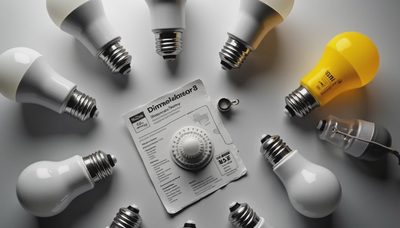
If you have ever asked, "why do my dimmable LED lights flicker," you are not imagining the problem. Flickering can appear as a visible shimmer, a faint pulsing at the edge of your vision, or a brief flutter when the light is set below full brightness. In most homes, the cause is a mismatch between the LED lamp and the dimmer, not a failing electrical service. The good news is that you can narrow down the cause systematically.
Start with the dimmer, not the bulb
Traditional incandescent bulbs are simple electrical loads. A standard dimmer reduces the power reaching the filament, and the filament responds smoothly because it stays hot between each cycle of alternating current. An LED lamp contains a driver, which converts incoming power into the low-voltage current used by the light-emitting diodes. That driver has to interpret the dimmer's signal.
When the two devices are not designed to work together, the driver can repeatedly start and stop, especially near the bottom of the dimming range. This is why a lamp might look stable at 100 percent but flicker at 30 percent. A dimmer labeled for incandescent bulbs is not automatically suitable for LEDs. Look for language such as LED-compatible, forward-phase, reverse-phase, or ELV, depending on the fixture and wiring system.
The most useful first test is simple. Set the lights to full output, then lower them slowly. Note the exact point where flickering starts. If the shimmer occurs only between roughly 10 and 40 percent, compatibility or minimum-load behavior is a strong suspect. If it happens at every setting, investigate the lamp, socket, connections, or circuit next.

Check the LED lamp and the total load
LED products vary considerably, even when their packaging looks similar. A reputable dimmable LED from Philips, Cree Lighting, Feit Electric, or another established manufacturer usually lists a compatible dimmer range or provides a compatibility guide. The word dimmable by itself does not guarantee perfectly smooth performance with every control.
Also calculate the total load on the dimmer. Six 9-watt lamps create a 54-watt LED load, but some older dimmers require a larger minimum load to operate properly. A single low-wattage lamp on a conventional dimmer can be especially troublesome. In that situation, replacing the dimmer with a control specifically rated for low-wattage LEDs often solves the issue more reliably than adding extra lamps.
Do not mix different LED brands or lamp designs on the same dimmer while troubleshooting. One lamp may use a different driver design and react differently from the others. Install matching lamps, then test again. If one lamp flickers while the remaining lamps stay steady, move it to another socket. The problem following the lamp points toward a defective product; the problem staying with the socket points toward the fixture or wiring.
Why do my dimmable LED lights flicker at low levels?
Low-level flicker is often related to the way phase-cut dimmers control alternating current. Rather than delivering a smooth reduced voltage, the dimmer turns portions of each electrical cycle on and off. The LED driver smooths that signal as best it can. At a low setting, there may not be enough energy in each cycle for the driver to maintain a stable output.
Some dimmers also have a small standby current that travels through the circuit even when the light is switched off. With incandescent lamps, that current is too small to produce visible light. An LED driver can accumulate and release it, causing a faint flash every few seconds when the lamp should be off. If the flicker occurs while the lights are off, a compatible dimmer or an electrician-installed solution is more appropriate than replacing bulbs repeatedly.
Smart bulbs introduce another layer. A smart LED bulb generally needs constant power so its wireless controls remain active. Putting it behind a wall dimmer can cause pulsing, communication failures, or damage. Use a standard on-off switch with smart bulbs, or use a smart dimmer designed for a compatible dimmable fixture.
Inspect heat, connections, and circuit behavior
LEDs run cooler than incandescent lamps, but their electronic drivers still need reasonable ventilation. A lamp installed in a tightly enclosed recessed housing can overheat, causing intermittent output or early failure. Check the packaging for an enclosed-fixture rating. A non-rated lamp inside a sealed can may flicker after it warms up and appear normal again after cooling.
Loose connections deserve more caution. Flickering that affects several fixtures, changes when appliances start, or comes with buzzing, a hot switch plate, a burning smell, or discoloration should not be treated as a lamp problem. Turn off the circuit and arrange an inspection by a qualified electrician. Do not remove a service-panel cover or tighten energized wiring yourself.
A circuit shared with a motor, older fluorescent ballast, HVAC equipment, or a large appliance can also create disturbances. One light that flickers only when a refrigerator or exhaust fan starts may be reacting to voltage changes or interference. That pattern is useful information for an electrician and can prevent hours of random product swapping.

A practical troubleshooting sequence
Work through these steps in order:
- Confirm whether the flicker occurs at full brightness, low brightness, or when switched off.
- Test one fixture at a time and remove any smart bulbs from the dimmer circuit.
- Replace mixed lamps with a matching set of dimmable LEDs from the same product line.
- Check whether the dimmer is specifically rated for LED loads and the type of fixture installed.
- Compare the total wattage with the dimmer's minimum and maximum LED load ratings.
- Test a different compatible dimmer if the lamps are known to be good.
- Stop troubleshooting and call an electrician if multiple circuits flicker or you notice heat, odor, buzzing, or arcing.
This sequence separates a product mismatch from a wiring concern. It also gives you concrete observations to share with a lighting professional instead of simply reporting that the lights are acting strangely.
Choose the fix that matches the cause
If only one inexpensive lamp flickers, replacing it is usually the fastest answer. If every lamp flickers at the same dimming point, choose a dimmer listed on the lamp manufacturer's compatibility chart. Lutron, Leviton, and Eaton all offer LED-rated controls, but the right model depends on the wiring method, load, switch location, and whether you want smart-home control.
A better dimmer should reduce the problem, but it cannot correct a loose connection or an overloaded circuit. For a renovation, specify the lamp, fixture, and dimmer as a system rather than selecting each item independently. I also recommend testing the intended combination before installing twenty recessed lights. A small sample on a workbench can reveal buzzing, dead travel, or an irritating low-level shimmer before drywall closes the ceiling.
So, why do my dimmable LED lights flicker? Usually, the answer is an incompatible dimmer, a poor driver match, an undersized load, or a lamp operating outside its rated conditions. Identify when the flicker occurs, test matching components, and treat heat or wiring symptoms seriously. Smooth light is not just more comfortable; it is evidence that the control, driver, and electrical system are working together as designed.