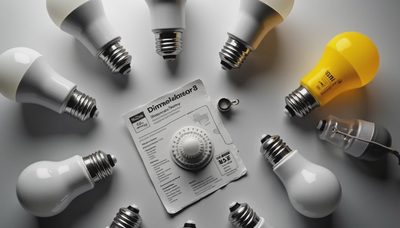
The right light changes how a room feels after sunset. Dimmable light bulbs let you move from bright task lighting while cooking to a softer level for dinner without changing fixtures. That flexibility is useful, but choosing the wrong bulb can create flicker, buzzing, limited range, or a color that makes your carefully selected paint look unpleasant. The solution is not simply buying the highest-lumen bulb on the shelf. It is matching the bulb, dimmer, fixture, and purpose of the room.
Why dimmable light bulbs improve a room
Most rooms need more than one lighting mood. A kitchen might require strong, even illumination for chopping vegetables, then a lower setting when guests gather around the island. In a living room, full output helps you find a dropped earring, while 20 to 40 percent output is more comfortable for conversation and television. Bedrooms often need useful light for folding laundry but very little light at bedtime.
Dimmable light bulbs support this layering principle by allowing one lighting layer to serve several moments. You still need ambient, task, and accent lighting when possible, but adjustable output makes each layer more useful. Instead of treating a ceiling fixture as the only source of light, think of it as the general background. Table lamps, under-cabinet strips, and wall lights can then add localized brightness and visual depth.
The most important detail is compatibility. A bulb labeled dimmable is designed to reduce light output, but it is not automatically compatible with every wall control. Older incandescent dimmers often behave poorly with LED products. An LED-rated, forward-phase, reverse-phase, or universal dimmer is usually a better match, depending on the circuit and manufacturer instructions. If a fixture contains several bulbs, use the same model in every socket so the group dims evenly.

Read the label before buying
Start with lumens, not watts. Watts measure electrical consumption; lumens describe visible light. A typical 60-watt incandescent replacement produces roughly 800 lumens while using far less electricity as an LED. For a bedside lamp, 450 to 800 lumens may be comfortable. A kitchen ceiling fixture could need several thousand lumens distributed across multiple bulbs, especially if the ceiling is high or the surfaces are dark.
Color temperature is the next decision. It is measured in Kelvin, or K. A 2700K bulb produces a warm, golden light similar to a traditional incandescent lamp. It works well in living rooms, bedrooms, dining rooms, and rooms with warm wood or cream-colored finishes. A 3000K bulb looks cleaner and slightly whiter without feeling clinical, making it a strong choice for kitchens, bathrooms, hallways, and many new-build interiors. Bulbs around 4000K are cooler and more energetic; I usually reserve them for garages, workshops, laundry rooms, and utility spaces.
Color rendering also matters. The Color Rendering Index, or CRI, describes how naturally a bulb reveals colors compared with a reference source. Look for CRI 90 or higher in kitchens, bathrooms, closets, and anywhere you assess clothing, artwork, food, or makeup. A lower-CRI bulb can make reds look dull and skin tones appear gray, even when the room has adequate brightness.
When comparing dimmable light bulbs, check whether the package lists a minimum dimming level. Some LEDs fade smoothly to about 10 percent, while others shut off around 20 or 30 percent. That difference is noticeable in a bedroom or dining room where a very low glow is part of the design.
Match dimmable light bulbs to the fixture
The base and shape must physically fit, but the fixture has other requirements too. An A19 bulb is the familiar rounded shape used in many table lamps and open pendants. A chandelier may use a smaller E12 candelabra base. Recessed cans often require a BR30, PAR30, or integrated retrofit module. Check the fixture label for maximum wattage and whether the socket is rated for enclosed use.
Enclosed fixtures trap heat, and heat can shorten the life of an LED that is not designed for that environment. If a flush-mount ceiling light has a glass cover, choose a bulb specifically marked for enclosed fixtures. In a damp bathroom location, use a product rated for damp locations. A bulb being dimmable does not make it suitable for moisture or a sealed housing.
Shape affects the quality of the light as well. A clear filament bulb creates sparkle in an open pendant, but its visible filaments can produce glare at eye level. A frosted bulb spreads light more gently and is usually better for a bare lamp socket near a sofa or bed. For recessed fixtures, the trim and beam distribution may matter more than the bulb's appearance.

Fix flicker, buzzing, and uneven dimming
Flicker is not always obvious in a still room. You might notice it as a faint shimmer, eye fatigue, or a strobe-like effect when moving your hand. Buzzing can come from the bulb, dimmer, or an electrical interaction between them. First, confirm that the bulb is dimmable and that every bulb on the circuit is the same type. Mixing LED brands or combining LED and incandescent lamps can produce unpredictable results.
Next, inspect the dimmer's rating. Some controls have a minimum load requirement that a small group of LEDs does not meet. Others are designed for a particular dimming method. Replacing an old incandescent control with a quality LED-compatible dimmer often solves the problem, but electrical work should be handled safely and according to local requirements. If the lights still pulse after a compatible control is installed, the fixture, wiring, or bulb electronics may need professional attention.
Smart dimmable light bulbs create another option. Products from Philips Hue, LIFX, and similar systems can be controlled by an app, voice assistant, or wireless switch. Many smart bulbs require constant power, so placing them behind a standard wall dimmer can cause trouble. If you want both app control and a conventional wall switch, choose a system designed for that arrangement rather than improvising.
A practical room-by-room starting plan
For a living room, begin with warm 2700K light, a high CRI, and a dimmer that reaches a genuinely low setting. Use the ceiling fixture at moderate output and let lamps provide pools of light near seating. In a dining room, choose a bulb with good color rendering so food and wood tones look natural; keep the pendant low enough to feel intimate but dim it until faces remain comfortable to see.
In a kitchen, 3000K is a dependable starting point. Put brighter light over work surfaces and avoid relying on a single central fixture that casts your body shadow onto the counter. Under-cabinet lighting can handle task work while dimmable light bulbs in the ceiling maintain a calm background level. In a bathroom, prioritize CRI 90 or better and place light beside the mirror when possible, not only above it.
For bedrooms, avoid over-lighting. A warm bulb around 800 lumens in the main fixture and lower-output bedside lamps create more control than one harsh overhead source. In a home office, 3000K light with adequate lumens can support alertness without making the space feel like a warehouse. Test the color after dark and against the room's actual finishes; a sample bulb is cheaper than replacing ten bulbs after installation.
A buying checklist that prevents expensive mistakes
Before purchasing, photograph the existing bulb label and write down its base, shape, lumen output, color temperature, and wattage. Confirm that the replacement is dimmable, rated for the fixture, and compatible with the wall control. If the room has several matching fixtures, buy one sample first. Install it during the evening, dim it through its full range, and look at nearby paint, tile, fabric, and wood.
Dimmable light bulbs work best when they are treated as part of a lighting system rather than isolated products. Choose the mood first, then select lumens, color temperature, CRI, fixture rating, and control technology to support it. Once the basic compatibility is right, the upgrade is often simple: a better bulb and the right dimmer can make the same room feel calmer, richer, and far more intentional.