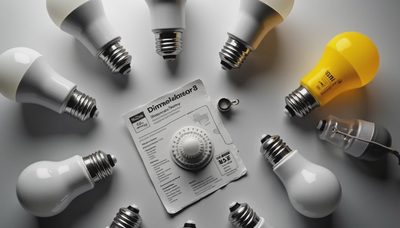
A ceiling fixture can brighten a room without making it feel inviting. I see this often in renovations: homeowners install the brightest available product, then wonder why the kitchen looks like a showroom and the living room feels flat. The right led ceiling lights solve more than a visibility problem. They shape contrast, color, comfort, and the way people move through the space.
The useful question is not simply, “How many lumens do I need?” It is, “What should this room help me see, and how should it feel at 8 p.m.?” Once you answer that, selecting a fixture becomes much easier.
Start with the job the room needs to perform
Every room has a lighting job. In a kitchen, the ceiling fixture provides general light, but countertops also need focused task lighting. In a bedroom, you usually want soft illumination that does not feel clinical. A hallway needs safe, even coverage rather than a dramatic pool of light. A home office needs enough vertical and horizontal light to reduce eye strain on paper and screens.
This is why led ceiling lights work best as part of a layered plan. Ambient light fills the room. Task light supports a specific activity. Accent light adds depth around artwork, shelving, plants, or architectural details. A flush-mount fixture can provide the ambient layer, while under-cabinet strips and a reading lamp handle the other two jobs.
Measure the room before shopping. Note its length, width, ceiling height, window locations, and surface colors. A 10-by-12-foot bedroom with pale walls needs less output than a room of the same size with dark walnut paneling. Glossy surfaces also reflect more light, sometimes creating glare instead of comfort.
Understand color temperature and CRI
Color temperature describes whether light appears warm or cool. It is measured in Kelvin, abbreviated K. Around 2700K resembles the warm glow of an incandescent lamp and suits bedrooms, dining rooms, and relaxed living spaces. Around 3000K is a useful middle ground for many kitchens, bathrooms, and open-plan interiors. Products from 4000K upward look cooler and can work in garages, workshops, or utility areas, but they often feel stark in a living room.
For most homes, I start by keeping connected spaces within the same general color range. A 2700K living room beside a blue-white 5000K kitchen can make the open floor plan feel visually disconnected. You do not need every room to match perfectly, but abrupt changes should be intentional.
CRI, or color rendering index, describes how naturally a light source reveals colors compared with a reference source. A CRI of 90 or higher is a strong target for kitchens, bathrooms, closets, and rooms where paint, food, wood, or clothing needs to look accurate. A low-CRI product can make reds appear dull and skin tones look gray, even when the room is technically bright.
When comparing led ceiling lights, look beyond the Kelvin number. Check the CRI, whether the manufacturer lists R9 performance for saturated reds, and whether the color remains consistent across the dimming range.
Choose the fixture shape for the ceiling and architecture
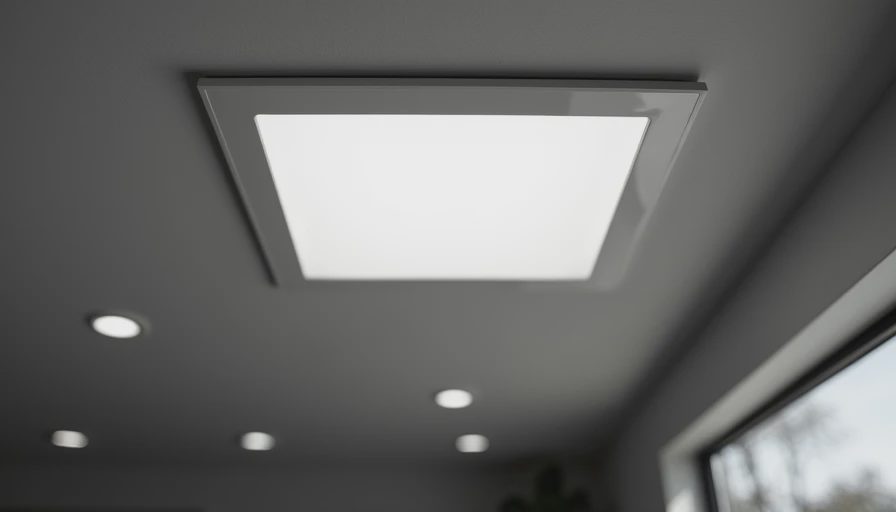
Flush mounts sit close to the ceiling and are practical in rooms with standard or low ceiling heights. They work well in bedrooms, corridors, laundry rooms, and smaller entries. Semi-flush fixtures drop a little lower and can introduce a more decorative silhouette without requiring the clearance of a pendant or chandelier.
Recessed downlights create a cleaner ceiling plane, but they should not be scattered randomly like dots on graph paper. Their beam angle, spacing, and relationship to walls determine whether the room feels smooth or patchy. A narrow beam can create bright circles and dark gaps. A wider beam produces softer overlap and is usually more comfortable for general illumination.
For a living room, I often prefer a restrained flush fixture near the center plus lamps around the seating. For a kitchen, several smaller recessed fixtures or a linear surface fixture can distribute light more evenly than one large disk in the middle. A central fixture illuminates the floor, but it may leave work surfaces in the shadow of your own body.
The best led ceiling lights are the ones that address the room’s geometry. Do not choose a fixture solely because its product photograph looks attractive against a white studio background.
Plan placement before electrical work
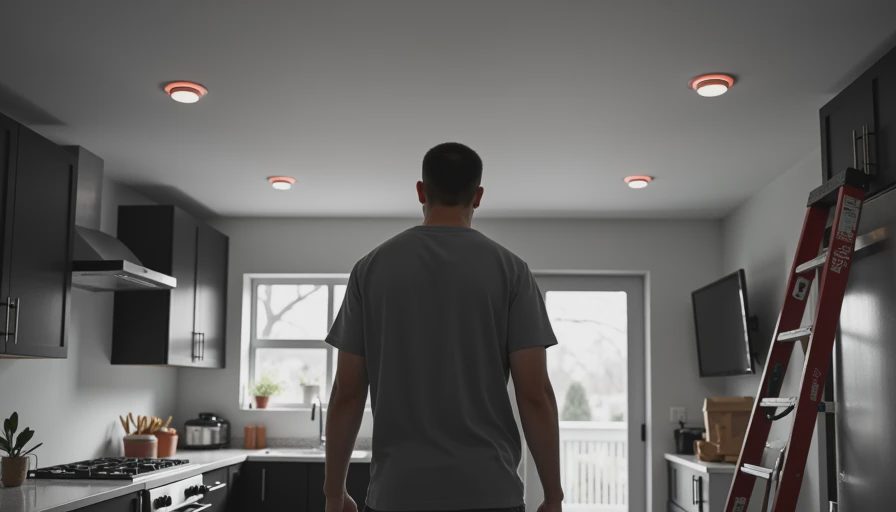
Placement is where many lighting plans succeed or fail. Draw the room from above and mark furniture, cabinet faces, doors, mirrors, and major artwork. Then identify where light should land. In a kitchen, fixtures should generally relate to counters and aisles, not merely to the center of the room. In a bedroom, avoid placing a bright downlight directly over the pillow; the beam can shine into a person’s eyes while they are lying down.
Wall proximity matters too. A fixture placed closer to a wall can wash cabinets, tile, or textured paint. This adds brightness to vertical surfaces, which often makes a room appear brighter without increasing total wattage. It also reduces the cave-like effect caused by a bright floor and dark walls.
If you are remodeling, ask the electrician to confirm junction-box locations, circuit capacity, insulation contact ratings, and dimmer compatibility before drywall closes. IC-rated recessed products are designed for contact with insulation when installed according to their instructions. Wet-location or damp-location ratings matter in bathrooms, covered porches, and other areas exposed to moisture.
Use dimming and controls to change the room after dark
A room rarely needs the same light level all evening. Full output may be useful while cleaning or preparing food, while 30 to 50 percent can feel better during dinner or conversation. Dimming gives one fixture several useful settings instead of forcing you to accept a single mood.
Compatibility is critical. Some integrated fixtures require a specific LED-rated dimmer, and not every wall control works well with every driver. Poor combinations can cause flicker, buzzing, limited dimming, or a fixture that will not turn on reliably. Confirm the fixture’s dimmer list and install a compatible control rather than assuming an old incandescent dimmer will work.
Smart controls add scheduling, scenes, and voice commands, but they are not automatically better. A simple wall dimmer is often the most dependable choice for a guest room or hallway. In a larger renovation, scenes can coordinate ceiling fixtures, pendants, and accent lighting so one button changes the entire room from cleaning mode to evening mode.
A practical buying checklist
Before ordering led ceiling lights, compare lumens, wattage, color temperature, CRI, beam spread, dimming compatibility, and the fixture’s location rating. Lumens describe light output; watts describe energy consumption. Two products with the same wattage can produce different amounts of light, so wattage alone is not a useful brightness measure.
Read the installation instructions and warranty. Integrated LED fixtures can be efficient and visually clean, but replacing the light source may require replacing the whole fixture when its driver eventually fails. Products with replaceable lamps offer easier maintenance, while sealed integrated units often provide a thinner profile and better optical control.
Budget for the controls and installation, not just the fixture. A $120 ceiling light on a poorly placed switch can perform worse than a $60 fixture on the right circuit with a quality dimmer. For a renovation, sketch the lighting zones first, then price the products that support those zones.
Good led ceiling lights should make daily activities easier while staying quiet in the background. Choose the color for the room’s mood, the output for its work, and the placement for its surfaces and furniture. When those decisions work together, the ceiling disappears—and the room finally feels like itself.