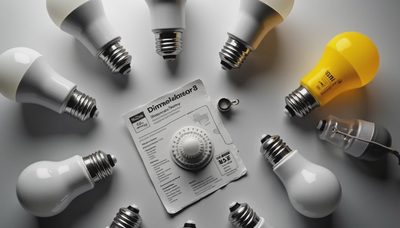
A led dimmer switch can change a room more dramatically than a new fixture. It lets you move from bright, practical light for cleaning or cooking to a softer level for dinner, reading, or winding down. Yet dimming is not simply a matter of installing any wall control. The switch, LED bulb, fixture, and wiring must work together. Once you understand that relationship, choosing the right control becomes much less mysterious.
Why LED lighting needs a compatible dimmer
Traditional incandescent bulbs are electrically simple. A dimmer reduces the power reaching the filament, and the filament produces less light. LEDs use a driver, which converts household electricity into the low-voltage current the light-emitting diodes need. That driver determines how smoothly the lamp dims and how low it can go.
A compatible led dimmer switch is designed to communicate with that electronic driver. An incompatible control can create flickering, buzzing, delayed starts, uneven dimming, or a narrow range between full brightness and darkness. You might also see a bulb glow faintly after the switch is off. These problems are not always caused by a defective bulb; they often indicate a mismatch between the control and the load.
Look for bulbs labeled dimmable, then compare the bulb maker's compatibility information with the switch manufacturer's list. Products from Lutron, Leviton, and Eaton are common choices, but the brand name alone does not guarantee a perfect result. A dimmer rated for LED loads is the starting point, not the entire specification.

Pick the control based on the room
The best led dimmer switch depends on how people use the space. In a bedroom, a single-pole dimmer is often enough when one wall location controls the ceiling light. In a hallway or stairwell, the same light may be controlled from two locations. That requires a three-way compatible dimmer, with the companion switch installed at the second location.
Some dimmers include a small locator light so you can find the control at night. Others have a paddle for on and off plus a separate slider for brightness. A rotary control offers excellent tactile feedback, while a smart dimmer can be adjusted through an app, voice assistant, schedule, or scene button. The extra technology is useful when you want the kitchen, living room, and porch lights to respond together, but it adds setup requirements and sometimes a higher purchase price.
A neutral wire is another important consideration. Many older homes do not have a neutral wire in every switch box. Certain smart dimmers require one, while other models are designed to operate without it. Do not assume the wiring behind the wall matches the wiring in a newer home. Turn off the circuit at the breaker and have a qualified electrician identify the conductors if you are uncertain.
Think in layers, not one brightness setting
A dimmer is most useful when it supports a layered lighting plan. Ambient light fills the room, task light helps with a specific activity, and accent light draws attention to artwork, shelving, or architectural details. If one ceiling fixture does everything, dimming it lower can make the room darker without making it more comfortable.
Consider a living room with six recessed LED downlights, a floor lamp beside a chair, and a small picture light over a bookcase. A led dimmer switch on the downlights can reduce glare while the floor lamp provides focused reading light. The picture light can remain at a lower, steady level. This arrangement feels more balanced than turning every light down together because each layer has a different job.
In a kitchen, bright task lighting over counters should remain clear and useful while decorative pendants over an island operate at a warmer evening level. In a bathroom, dimming can make a late-night visit less jarring, but the vanity light still needs enough brightness for shaving, makeup, or other close work. The goal is not maximum dimming; it is the right brightness for the moment.
Check bulbs, wattage, and minimum load
Before buying a led dimmer switch, write down how many bulbs the circuit controls and the wattage of each one. Six 9-watt LED lamps create a 54-watt load, but the dimmer must still be rated for LED operation. Some controls also have a minimum load requirement. If only one low-wattage bulb is connected, the control may struggle to turn it fully off or dim it smoothly.
Mixed bulbs are another common source of trouble. Combining LED lamps from different manufacturers, or mixing LED and incandescent lamps on one dimmer, can produce inconsistent behavior. Even bulbs with the same color temperature can use different driver designs. For a renovation, I usually specify matching lamps for a complete circuit rather than replacing bulbs one at a time over several years.
Color temperature matters as well. A 2700K lamp gives a warm, evening appearance, while a 3000K lamp looks cleaner and more neutral. Dimming can make a light feel warmer, but it does not change the lamp's rated color temperature in the same way as a warm-dim product. If you want candlelike light at low levels, look for bulbs specifically described as warm-dim or sunset-dim.
Smart dimming and everyday convenience
A smart led dimmer switch is valuable when lighting needs to change throughout the day. You can create a morning scene at 80 percent, a daytime setting near full output, and an evening scene at 30 percent. Some systems connect with Apple Home, Google Home, or Amazon Alexa. Others use a proprietary hub that coordinates multiple rooms and controls.
Smart control is not automatically better. The switch may need a neutral wire, a reliable Wi-Fi connection, and a compatible load. A family may appreciate voice control in a kitchen, while a simple paddle and slider may be more dependable in a guest room. Think about the action you want to repeat most often. If you mainly want to lower the lights while watching television, a well-designed wall control may be easier than opening an app.
Also consider power recovery behavior. After an outage, some smart products return to the previous setting, while others come back on at full brightness. That detail matters in bedrooms and entryways. Read the installation guide before buying rather than relying only on product photographs.
Safe installation and troubleshooting
Replacing a switch is not a job to rush. Shut off the breaker, verify that the circuit is dead with an appropriate tester, and photograph the existing wiring before disconnecting anything. Follow the manufacturer's wiring diagram, secure the ground connection, and make sure wires are contained within the electrical box. If the box is crowded, the wires are aluminum, or the circuit behaves unexpectedly, stop and call a licensed electrician.
If the lights flicker, first confirm that every bulb is dimmable and compatible with the control. Then test a single matching bulb or a complete set from one manufacturer. Buzzing can come from the dimmer, the lamp driver, or mechanical vibration in the fixture. A light that will not turn fully off may indicate an incompatible no-neutral design or insufficient load. Replacing random parts often costs more than identifying the mismatch systematically.
For older recessed fixtures, check whether the LED retrofit module is rated for dimming. A wall control can be perfectly suitable while the retrofit itself is not. The same principle applies to ceiling fans: use a lighting dimmer only for a light circuit, never to control a fan motor unless the product is specifically designed for that purpose.
A practical buying process
Start by identifying the fixture type, the number and wattage of lamps, and whether one or multiple wall locations control the light. Next, decide whether you need a basic, three-way, or smart control. Confirm the presence of a neutral wire if required, then compare the exact bulb or fixture model with the manufacturer's compatibility information.
Choose a control with a brightness range that suits the room instead of selecting the cheapest option. A $15 basic dimmer can work well for a small bedroom, while a $40 to $70 smart model may be sensible for a connected living area. After installation, test the light at full brightness, medium output, and its lowest useful setting. Listen for noise and watch for flicker over several minutes.
The right led dimmer switch disappears into the experience of the room. You notice a calm dinner, a comfortable reading corner, or a hallway that no longer feels harsh, rather than the electronics making it happen. That is the real measure of good lighting control: not simply turning the light down, but giving every evening activity the brightness it deserves.